Wondering how long do cats sleep each day? Discover the real hours by age, why cats nap so much, and when sleep signals a health problem.
How Long Do Cats Sleep?
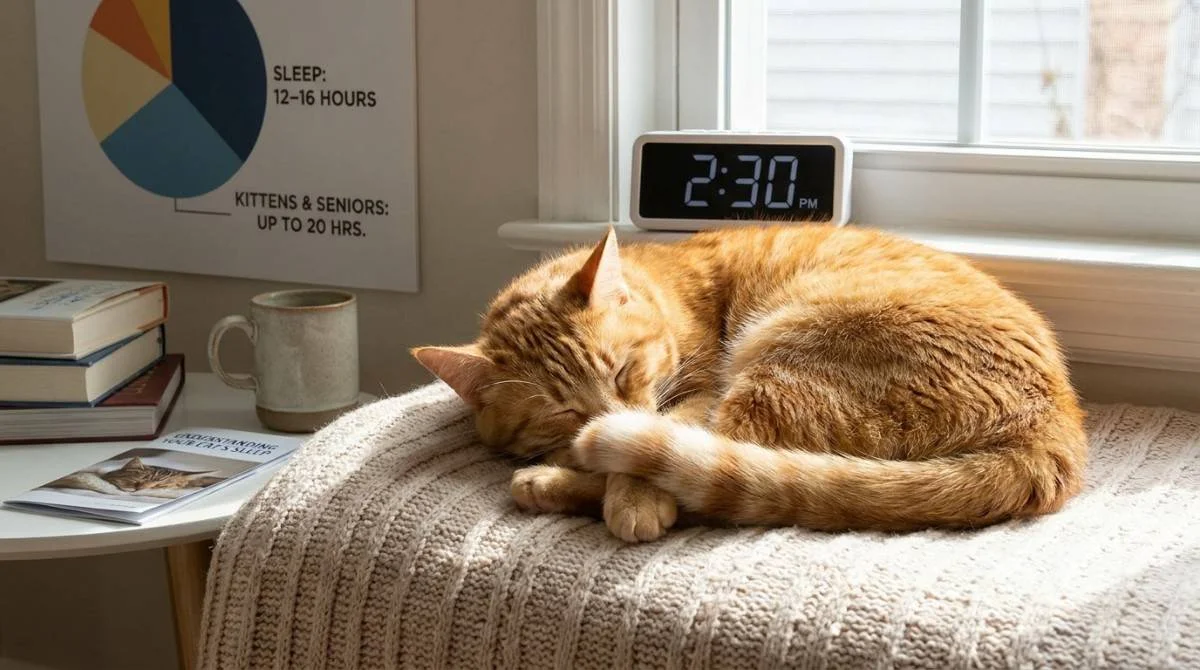
If you own a cat, you already know one thing for sure: your furry friend loves to nap. But how long do cats sleep in a normal day? On average, cats sleep between 12 and 16 hours a day. Some sleep even more. Kittens and senior cats often sleep up to 20 hours. This might sound like a lot compared to humans, but for cats, it is completely normal. In this guide, we will break down exactly how much sleep your cat needs, why cats sleep so much, and when long sleep might be a sign of a health problem worth watching.
Cats are not lazy. They are simply wired this way. Understanding your cat’s sleep patterns, nap cycles, and resting behavior can help you spot the difference between a happy, healthy cat and one that might need a vet visit
Cat Sleep Hours by Age
Here is a simple table you can check anytime. It shows how many hours cats usually sleep, based on their age and life stage.
| Cat Age Group | Average Sleep Per Day | Notes |
|---|---|---|
| Kittens (0–6 months) | 18–20 hours | Growing bodies need extra rest |
| Adult cats (1–9 years) | 12–16 hours | Most active during dawn and dusk |
| Senior cats (10+ years) | 15–20 hours | Slower metabolism, more rest needed |
| Sick or injured cats | 18+ hours | Body uses sleep to heal |
This table gives you a fast, clear picture. But there is a lot more to learn about why cats sleep this way, and how you can tell if your cat’s sleep habits are healthy.
Why Do Cats Sleep So Much?
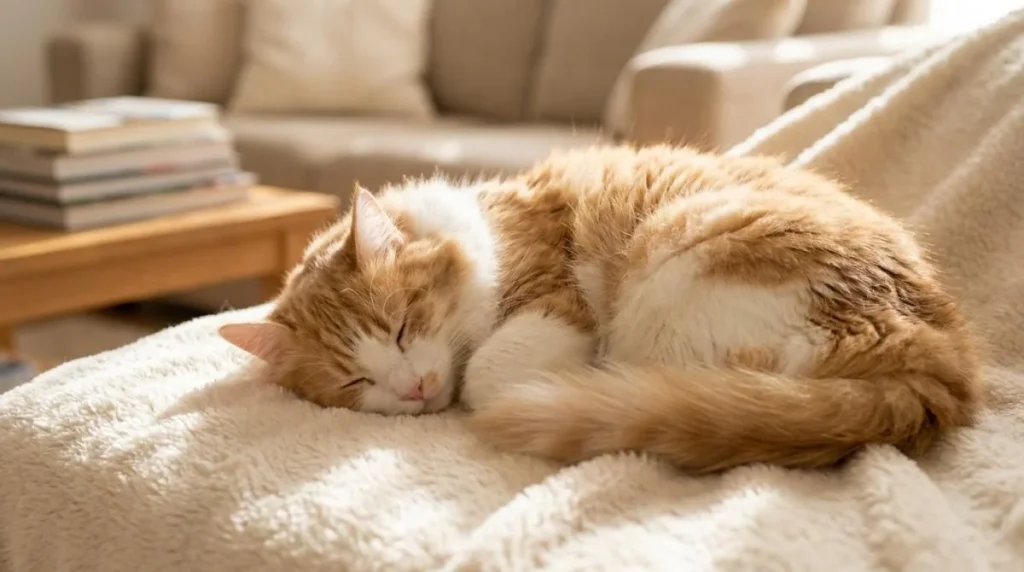
Cats sleep a lot because of their natural instincts. Long ago, wild cats had to hunt for every meal. Hunting takes a huge burst of energy. So cats evolved to rest as much as possible between hunts. This saved energy for chasing prey.
Even though your house cat gets food from a bowl, this instinct never went away. Your cat’s body still thinks it needs to save energy for the next big hunt, even if that “hunt” is just chasing a toy mouse across the living room floor.
Cats Are Crepuscular, Not Nocturnal
Many people think cats are nighttime animals. That is not quite true. Cats are crepuscular, which means they are most active at dawn and dusk. This is when their natural prey, like mice and birds, are also active. During the rest of the day and night, cats sleep in short bursts to save energy for these active hours.
This is also why your cat might zoom around your house early in the morning or right before bedtime. It is simply their body clock at work.
Energy Conservation and Predator Instincts
Big wild cats like lions can sleep up to 20 hours a day too. Hunting uses fast, powerful bursts of energy. After a hunt, even a short one, a cat’s body needs time to recover. This is true whether your cat is chasing a real mouse or a feather toy. Sleep helps cats stay ready for action at any moment.
The Cat Sleep Cycle Explained Simply
Cats do not sleep the same way humans do. We usually sleep once, for about 7 to 9 hours, at night. Cats sleep in many short naps throughout the day and night. This is called polyphasic sleep.
Each nap usually lasts around 50 to 115 minutes. Cats cycle through two main types of sleep, just like people do.
Light Sleep (Catnaps)
Most of a cat’s sleep is light sleep. During light sleep, your cat may seem asleep, but their ears might twitch at sounds. Their eyes may be slightly open. This kind of nap lets your cat rest while staying alert to danger. It is easy to wake a cat from light sleep.
Deep Sleep (REM Sleep)
After enough light sleep, cats fall into deep sleep. This is also called REM sleep, short for “rapid eye movement.” During deep sleep, your cat’s whiskers, paws, or tail might twitch. Their eyes may move quickly under closed eyelids. Some experts believe this means cats dream during this stage, much like humans do. Deep sleep usually only lasts a few minutes before a cat shifts back to light sleep.
This back-and-forth pattern between light and deep sleep repeats many times throughout the day.
How Much Sleep Do Cats Need at Each Life Stage?
Just like humans, a cat’s sleep needs change as they grow older. Let’s look closer at each stage.
Kittens Need the Most Sleep
Kittens grow extremely fast. Their little bodies use huge amounts of energy to build muscle, bones, and brain power. Because of this, kittens sleep between 18 and 20 hours a day. Sleep helps their brain develop and their body grow strong.
If you have a new kitten, do not worry if they sleep most of the day. This is completely normal and healthy.
Adult Cats Sleep Less, But Still a Lot
Adult cats, usually between 1 and 9 years old, sleep around 12 to 16 hours a day. This is the “typical” range most people think of when they ask how long do cats sleep. Adult cats balance sleep with play, eating, grooming, and exploring.
Senior Cats Sleep More Again
Once cats reach about 10 years old, they often start sleeping more again, sometimes reaching 15 to 20 hours a day. Older cats have less energy and slower joints. Sleep helps their body rest and recover. If your senior cat sleeps a lot but still eats well, plays sometimes, and acts happy, this is usually normal aging, not a health problem.
What Affects How Long a Cat Sleeps?
Several factors can change how much your cat sleeps. Here are the most common ones.
Weather and Season
Cats often sleep more on cold, rainy, or gloomy days. Just like humans might feel sleepy on a dark winter afternoon, cats respond to changes in light and temperature. Shorter days in winter can also affect their internal body clock.
Indoor vs. Outdoor Lifestyle
Indoor cats often sleep more than outdoor cats. Outdoor cats have more to explore, more prey to chase, and more reasons to stay alert. Indoor cats, especially those without much playtime, may sleep out of boredom.
Breed Differences
Some cat breeds are naturally more active, while others are calmer and sleep more. For example, active breeds like the Bengal or Abyssinian may sleep a bit less than laid-back breeds like the Persian or Ragdoll. Genetics play a real role in energy levels.
Diet and Health
A cat eating a balanced diet usually has steady energy and normal sleep habits. Poor nutrition, being overweight, or having an untreated illness can all change sleep patterns, sometimes causing more sleep, sometimes less.
When Is Cat Sleep a Warning Sign?
While cats naturally sleep a lot, sudden changes in sleep habits can be a signal something is wrong. Here is what to watch for.
Signs of Too Much Sleep
Contact your vet if your cat suddenly sleeps much more than usual, especially alongside these signs:
- Not eating or eating much less
- Hiding more than normal
- Trouble walking or jumping
- Weight loss without a diet change
- Seeming weak or unresponsive
These signs could point to illness, pain, or conditions like kidney disease or an underactive thyroid.
Signs of Too Little Sleep
Cats that seem restless, pace at night, or rarely settle down might be dealing with stress, lack of exercise, or, less commonly, an overactive thyroid. If your cat seems constantly wired and never fully rests, a vet visit can help rule out health concerns.
Trust Your Instincts as a Pet Owner
You know your cat better than anyone. If something feels “off” about their sleep, energy, or mood, it is always smart to reach out to your veterinarian. Catching health issues early often leads to better outcomes.
How to Help Your Cat Sleep Well
A happy, healthy cat usually sleeps well too. Here are simple ways to support good rest for your cat.
- Give them a cozy, quiet spot. Cats love warm, soft places away from loud noise.
- Keep a feeding routine. Regular mealtimes help regulate their body clock.
- Add playtime before bed. A short play session can help tire out extra energy, especially in the evening.
- Avoid disturbing naps. Let sleeping cats rest undisturbed when possible.
- Watch for pattern changes. Keeping a simple mental note of your cat’s normal habits helps you notice changes fast.
Small steps like these can make a big difference in your cat’s overall comfort and well-being.
Final Thoughts
So, how long do cats sleep? The short answer is 12 to 16 hours for most adult cats, with kittens and senior cats often sleeping even more. This is completely normal cat behavior rooted in instincts passed down from their wild ancestors. As a pet owner, understanding these sleep patterns helps you care for your cat with more confidence. Watch for any sudden changes, keep your cat comfortable, and enjoy those adorable nap-time moments. After all, a well-rested cat is usually a happy, healthy cat.
FAQS
How long do cats sleep on average each day?
Most adult cats sleep between 12 and 16 hours a day. Kittens and senior cats often sleep 18 to 20 hours daily.
Why do cats sleep so much compared to humans?
Cats sleep a lot because their bodies are built for short bursts of hunting energy. Sleep helps them recover and stay ready to react quickly.
Is it normal for a cat to sleep 20 hours a day?
Yes, this is normal for kittens, senior cats, or cats recovering from illness or surgery. Healthy adult cats sleeping this much occasionally is also usually fine.
Do cats dream while they sleep?
Many experts believe cats do dream during deep, REM sleep. You may notice twitching paws, whiskers, or closed-eye movement during this stage.
Why does my cat sleep more in the winter?
Cold weather and shorter daylight hours often cause cats to rest more. This is a normal seasonal behavior, not usually a health concern.
How can I tell if my cat is sleeping too much due to illness?
Watch for extra signs like loss of appetite, hiding, weight loss, or trouble moving. If these appear along with excess sleep, contact your veterinarian.
Hi, I’m Sana Sajid!I’m the voice behind CatsCare.blog, sharing my 10+ years of hands-on cat care experience. With a diploma in animal care, I offer practical tips, trusted advice, and easy-to-follow guides to help keep your cats healthy and happy.
When I’m not writing, I spend time with my own cats or exploring the latest developments in feline health. Follow CatsCare.blog for expert insights and real cat stories!
![A man's face in profile being gently pawed by an orange tabby cat whose claws are slightly extended near his nose. [Why did my cat bite my Nose]](https://catscare.blog/wp-content/uploads/2025/11/Why-did-my-cat-bite-my-Nose.jpg)
![A close-up profile of an orange tabby cat's eye, used to help pet owners understand [Why can I see my Cat’s third Eyelid].](https://catscare.blog/wp-content/uploads/2026/01/Why-can-I-see-my-Cats-third-Eyelid.jpg)

![A street scene in a Greek village with traditional white and blue buildings, featuring several stray or feral cats, visually answering [Why are there so many Cats in Greece].](https://catscare.blog/wp-content/uploads/2025/12/Why-are-there-so-many-Cats-in-Greece.jpg)