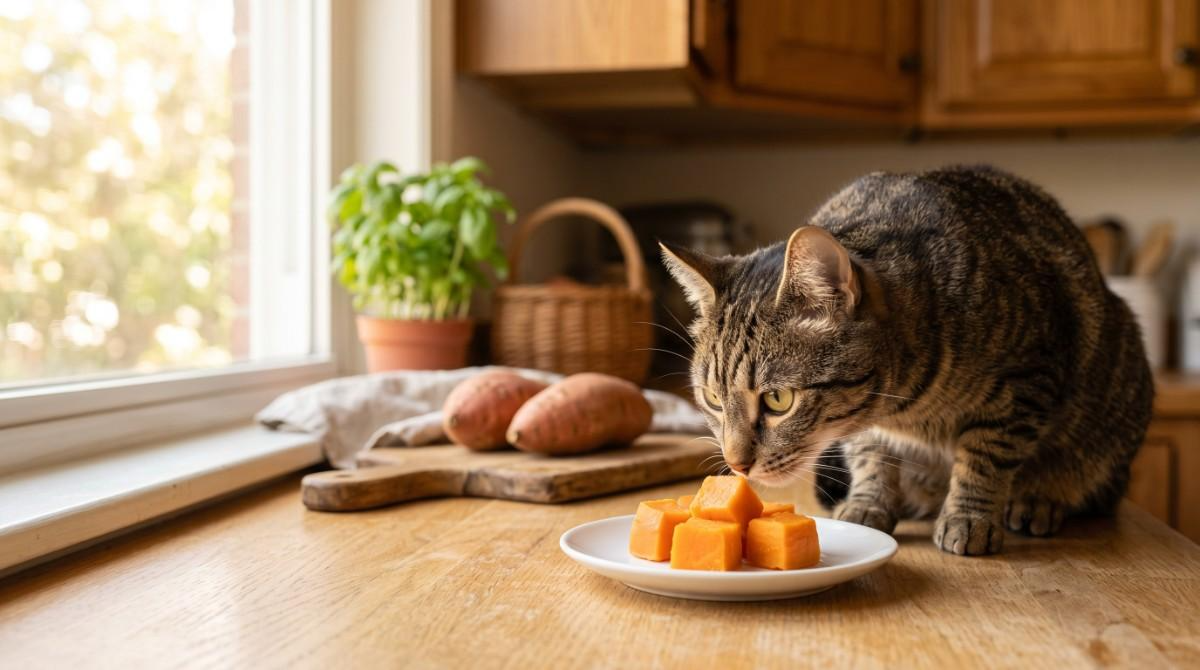
Can cats eat sweet potatoes safely? Learn the right amount, prep tips, and hidden risks vets want every US cat owner to know.
Can Cats Eat Sweet Potatoes?
Sweet potatoes sit on kitchen counters across the United States almost every night, especially around fall and the holidays. So it’s no surprise that many US cat owners ask the same question when their curious cat sniffs around the plate: can cats eat sweet potatoes?
The short answer is yes, cats can eat sweet potatoes, but only in small amounts and only when they are cooked, plain, and served the right way. Sweet potatoes are not toxic to cats, but they are not a natural part of a feline diet either, since cats are obligate carnivores who thrive mainly on meat. This guide breaks down exactly how much is safe, how to prepare it, and which mistakes could upset your cat’s stomach.
Is Sweet Potato Safe for Cats?
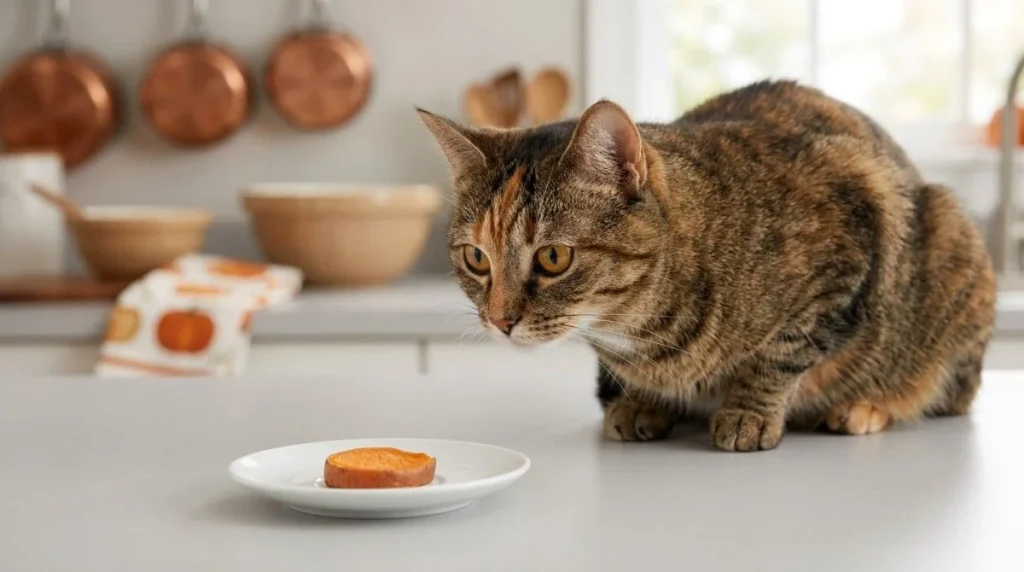
Yes. Cooked, plain can cats eat sweet potatoes is generally safe for cats in tiny amounts. It is not poisonous, and it will not harm most healthy cats if given as an occasional treat. But sweet potatoes should never replace regular cat food, and raw or seasoned sweet potato can cause real problems.
Sweet Potato vs Other Foods Cats Sometimes Try
Cat owners often mix up sweet potatoes with regular potatoes or pumpkin. Here is a simple side-by-side so you know exactly what you are dealing with.
| Food | Safe for Cats? | Best Prep Method | Watch Out For |
|---|---|---|---|
| Sweet Potato | Yes, in small amounts | Boiled, steamed, or baked, plain | Skin, raw pieces, added sugar or butter |
| Regular (White) Potato | Only if fully cooked | Boiled or baked, plain | Raw potato and green skin contain solanine, which is harmful |
| Pumpkin | Yes, often recommended by vets | Plain canned pumpkin or cooked flesh | Pumpkin pie filling with sugar and spices |
This table shows why sweet potato and pumpkin are the safer choices between the three, as long as they stay plain and fully cooked.
Why Do Cats Even Want Sweet Potatoes?
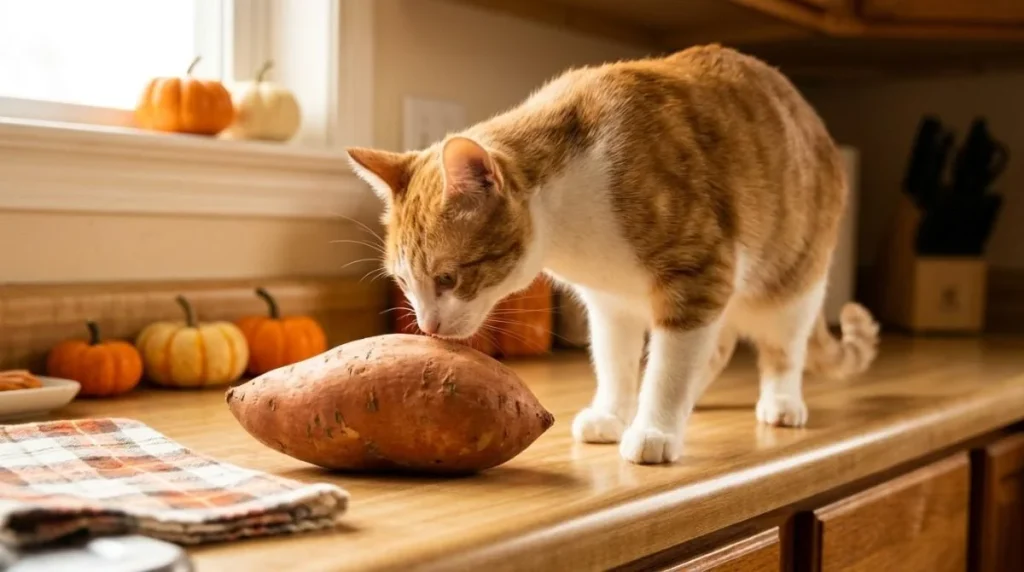
Here’s something interesting: cats cannot actually taste sweetness. Their tongues lack the taste receptors that let humans and dogs enjoy sugary foods. So when a cat begs for a bite of your sweet potato, it is not chasing that syrupy flavor. It is drawn to the smell, the soft texture, or simply the fact that you are eating something and cats are naturally curious about human food on your plate. Some cats will sniff sweet potato and walk away without interest. Others will happily lick a small mashed piece off a spoon. Both reactions are completely normal.
Are Sweet Potatoes Good for Cats?
Sweet potatoes are packed with nutrients that are great for people, and some of those benefits can carry over to cats in small doses.
Fiber for Digestive Health
Sweet potatoes contain both soluble and insoluble fiber. This fiber can help support healthy digestion and may ease mild constipation in some cats. A small spoonful now and then can act like a gentle nudge for a sluggish gut.
Antioxidants and Vitamins
Sweet potatoes offer beta-carotene, vitamin A, vitamin C, and potassium. These nutrients support the immune system and overall cell health. However, your cat’s regular food already supplies these nutrients in a form their body can use efficiently, so sweet potato is a bonus, not a requirement.
Hydration Boost
Boiled or steamed sweet potato holds onto water during cooking. A small piece can offer a tiny hydration boost, which is helpful for cats who are not big water drinkers.
Can cats eat sweet potatoes is bad?
Just because something is safe in small amounts does not mean more is better. Sweet potatoes carry a few real risks that every cat parent should understand.
High in Carbohydrates
Cats are obligate carnivores. Their bodies are built to run on animal protein, not plant carbohydrates. Sweet potatoes are naturally high in starch and sugar compared to meat. Feeding too much, too often, can contribute to weight gain and, over time, raise the risk of feline obesity or diabetes.
Digestive Upset
Some cats react to new foods with vomiting, diarrhea, or a bloated tummy. This is more likely if a cat eats a large portion instead of a tiny taste, or if the sweet potato still has its skin on.
Choking Hazard
Large chunks or thin sweet potato fries can be a choking risk, especially for small cats, kittens, or senior cats with dental issues.
How Much Sweet Potato Can a Cat Eat?
Portion size depends on your cat’s weight. As a general guide, treats of any kind, including sweet potato, should never make up more than 10 percent of your cat’s daily food intake.
| Cat Weight | Safe Sweet Potato Amount | How Often |
|---|---|---|
| 5–8 lbs (small cat) | About 1/2 teaspoon | Once or twice a week |
| 8–12 lbs (average cat) | About 1 teaspoon to 1 tablespoon | Once or twice a week |
| 12+ lbs (large cat) | Up to 1 tablespoon | Once or twice a week |
Always start with a tiny bite the first time. Watch your cat for 24 to 48 hours for signs of an upset stomach before offering sweet potato again.
How to Prepare Sweet Potato Safely for Your Cat
Preparation matters just as much as portion size. Follow these simple steps.
- Wash it well. Rinse the sweet potato to remove dirt and pesticide residue.
- Peel the skin off. The skin is tough, fibrous, and harder for cats to digest.
- Cook it fully. Boil, steam, or bake the sweet potato until it is soft. Never serve it raw.
- Skip the seasoning. No butter, no salt, no sugar, no spices. Plain is always best.
- Mash or cut it small. Small, soft pieces are easier and safer for your cat to eat.
- Cool before serving. Let it reach room temperature so it does not burn your cat’s mouth.
A small mashed spoonful mixed into your cat’s usual wet food is often the easiest way to introduce it.
What About Raw Sweet Potato, Skins, and Fries?
These are the three most common mistakes cat owners make, so let’s clear them up one at a time.
Raw Sweet Potato
Raw sweet potato is hard for a cat’s digestive system to break down. It can cause stomach pain, vomiting, or diarrhea. It is also firmer than cooked sweet potato, which raises the choking risk. Always cook it first.
Sweet Potato Skin
The skin is where most of the toughest fiber and any pesticide residue sit. It is not toxic, but it is harder to digest and offers little benefit. Peel it off before serving.
Sweet Potato Fries
Store-bought and restaurant sweet potato fries are usually cooked in oil and coated in salt or seasoning. The oil adds unnecessary fat, and the salt and spices can upset your cat’s system or, in some cases, be outright toxic. Skip fries entirely.
Sweet Potato and Cats With Health Conditions
If your cat has a health condition, sweet potato deserves extra caution.
Diabetic cats: Because sweet potato is high in natural sugar and starch, it can affect blood sugar levels. Diabetic cats generally do best avoiding sweet potato altogether unless your vet says otherwise.
Overweight cats: Since sweet potato is calorie-dense compared to lean meat, cats working on weight loss should stick to very small amounts, if any at all.
When in doubt, a quick call to your vet is always the safest move.
Sweet Potatoes in Commercial Cat Food
You may have noticed sweet potato listed as an ingredient on some cat food bags, especially grain-free formulas sold across the US. Brands like Wellness, Merrick, and Natural Balance use sweet potato as a digestible carbohydrate source and fiber booster in certain recipes. In these products, sweet potato is balanced carefully alongside animal protein, so it is used very differently than feeding a spoonful straight from your plate. This is a helpful reminder that a small amount of sweet potato, properly balanced, is not unusual in a cat’s overall diet.
What To Do If Your Cat Eats Too Much Sweet Potato
If your cat sneaks a larger piece than planned, do not panic. Watch for vomiting, diarrhea, lethargy, or refusal to eat over the next 24 hours. Most cats bounce back with no lasting effects. If symptoms are severe or do not improve within a day, contact your veterinarian. You can also reach the ASPCA Animal Poison Control Center at (888) 426-4435 if you are worried your cat ate something dangerous, such as sweet potato mixed with onion, garlic, or another harmful ingredient.
FAQs
Can cats eat sweet potatoes?
Yes, cats can eat sweet potatoes in small amounts if the sweet potato is cooked, plain, and peeled. It should only be an occasional treat, never a meal replacement.
Can cats eat sweet potatoes every day?
No, cats should not eat sweet potatoes every day. A small portion once or twice a week is enough. Daily feeding can add too many carbohydrates to a cat’s diet.
Can cats eat sweet potatoes?
No. Raw sweet potato is hard to digest and can cause vomiting, diarrhea, or choking. Always cook sweet potato fully before giving it to a cat.
Can cats eat sweet potatoes skin?
No, it is best to remove the skin. Sweet potato skin is tough, fibrous, and harder for a cat’s stomach to break down.
Is sweet potato or pumpkin better for cats?
Both are generally safe in small amounts. Pumpkin is often slightly higher in fiber and is commonly recommended by vets for mild digestive issues, but neither should replace a cat’s regular diet.
Can cats eat sweet potato pie or casserole?
No. Sweet potato pie and casserole usually contain sugar, butter, and spices like nutmeg, which can be harmful to cats. Only plain, cooked sweet potato is safe
Hi, I’m Sana Sajid!I’m the voice behind CatsCare.blog, sharing my 10+ years of hands-on cat care experience. With a diploma in animal care, I offer practical tips, trusted advice, and easy-to-follow guides to help keep your cats healthy and happy.
When I’m not writing, I spend time with my own cats or exploring the latest developments in feline health. Follow CatsCare.blog for expert insights and real cat stories!
![A person petting a tabby cat whose ears are backlit by a window, illustrating why an [Indoor Cat’s ears Hot] might just be due to sunlight.](https://catscare.blog/wp-content/uploads/2025/12/Indoor-Cats-ears-Hot.jpg)

![A gray and white cat with striking golden eyes looks intently forward against a blurred background of vertical wooden planks. [Why are Cats called Pussycats]](https://catscare.blog/wp-content/uploads/2025/12/Why-are-Cats-called-Pussycats.jpg)