Wondering when do cats stop growing? See the real age by breed, size, and sex plus 5 signs your cat has reached full size.
When Do Cats Stop Growing?
Most kittens stop growing somewhere between 12 and 18 months old, though the exact age depends on breed size, sex, and genetics. If you have ever watched a wobbly kitten turn into a full-size cat and wondered, “wait, is she done growing yet?” you are not alone. It is one of the most common questions new cat owners ask in the United States, right after “what do I feed her” and “why is she doing that at 3 a.m.”
The short answer is simple. Small and medium cats usually reach their adult size by 12 to 18 months. Large breeds, like the Maine Coon or Ragdoll, can keep filling out for up to 3 to 5 years. Everything in between depends on a mix of feline growth stages, diet, and whether your cat was spayed or neutered.
This guide walks through the full kitten growth timeline, breed-by-breed size differences, the real signs your cat has reached full maturity, and answers to the questions US cat owners search for most. No fluff, no filler — just what you actually need to know.

Quick Answer: Cat Growth at a Glance
Here is a simple table to see where your cat likely stands right now. Use it as a starting point, then read on for the details that matter most to your cat’s breed and body type.
| Cat Size Group | Typical Breeds | Stops Growing (Age) | Average Adult Weight |
| Small breeds | Singapura, Devon Rex | 9-15 months | 5-8 lbs |
| Medium breeds | Domestic shorthair, American Shorthair | 12-18 months | 8-12 lbs |
| Large breeds | Bengal, Siberian, Turkish Van | 18-24 months | 10-16 lbs |
| Giant breeds | Maine Coon, Ragdoll, Norwegian Forest Cat | 3-5 years | 12-25 lbs |
Weights are general ranges for healthy, moderately active cats. Your vet is the best judge of your cat’s individual growth.
The Full Kitten Growth Timeline, Month by Month
Cats do not grow at a steady pace. They grow in bursts, then level off, then burst again. Knowing what happens at each stage makes it much easier to tell if your kitten is on track.
Birth to 6 Months: The Fast Growth Phase
This is where the magic happens. A newborn kitten weighs about 3 to 4 ounces. By 8 weeks, most kittens have grown 8 times their birth size. That is a faster growth rate than almost any other pet.
During this window, your kitten’s bones, muscles, and organs are all developing at once. This is also when growth plates — the soft areas near the ends of long bones — are the most active. Feeding a proper kitten formula food matters enormously here, since it is packed with the protein and calcium young bones need.
[Section Image: newborn kitten nursing or a very young kitten being weighed on a small scale — see Image Prompts section]
6 to 12 Months: The Slowdown Begins
Growth does not stop cold at 6 months, but it does slow down. Your kitten will still be gaining height and length, but not at the dramatic pace of the first half-year. Many kittens reach sexual maturity during this stage too, often between 4 and 9 months old, which is well before they are done growing physically.
This is the stage where most vets recommend transitioning from kitten food to adult food, usually somewhere around the 10 to 12 month mark, depending on the cat’s breed and body condition.
12 to 18 Months: Reaching Adult Size
By this point, most cats — especially small and medium breeds — have reached or are very close to their full adult size. Height and body length level off first. Weight can still shift slightly for a few more months as muscle fills in.
Female cats tend to finish growing earlier in this window, often by 10 to 12 months. Male cats, particularly those that are neutered, sometimes keep growing a bit longer, closer to 18 months.
18 Months to 2 Years: Filling Out
Even after height and length stop changing, a cat’s body can keep “filling out.” Think of it like the difference between a teenager and a fully filled-out adult. Muscle tone increases, the chest broadens slightly, and the face can look more mature. This stage is subtle, and many owners do not even notice it happening.
2 to 5 Years: Large and Giant Breeds Catch Up
Here is where breed size really matters. Giant breeds like the Maine Coon, Ragdoll, and Norwegian Forest Cat are still growing well past their second birthday. Some Maine Coons do not reach full size until they are 4 or even 5 years old. If you have one of these breeds, patience is part of the deal — and honestly, watching them grow that slowly is half the fun of owning one.
Does Breed Really Change When a Cat Stops Growing?
Yes, and the difference is bigger than most people expect. Breed size is the single biggest factor in how long a cat keeps growing, even more than diet in most healthy cats.
Small breeds like the Singapura, one of the smallest domestic cat breeds, can be fully grown by 9 to 12 months. Compare that to a Maine Coon, which can take five times as long to reach full size. Mixed-breed cats usually fall somewhere in the middle, since it is hard to predict which traits they inherited from each parent.
If you adopted your kitten from a shelter and do not know the breed mix, a rough rule of thumb works well: the bigger your kitten’s paws and frame look relative to its body at 6 months, the more growing it likely has left to do.
A Closer Look at Slow-Growing Breeds
A handful of breeds are famous for taking their time. Knowing which ones fall into this group can save you a lot of unnecessary worry.
- Maine Coon: Often called the “gentle giant” of the cat world, this breed can keep growing for 3 to 5 years and may reach 18 to 25 pounds at full size.
- Ragdoll: Known for going limp when picked up, Ragdolls take up to 4 years to reach full physical maturity and typically settle between 10 and 20 pounds.
- Norwegian Forest Cat: A sturdy, muscular breed built for cold climates, this cat usually reaches full size around 4 to 5 years old.
- Siberian: An ancient, long-haired breed that can take up to 5 years to fill out completely.
- Ragamuffin: A close cousin of the Ragdoll, sharing a similarly slow growth curve and a similar adult weight range.
If your cat belongs to one of these breeds, do not panic if they still look a little lanky at age 2. That is completely normal, and full maturity is still on the way.
Fast-Maturing Breeds Worth Knowing
On the other end of the spectrum, a few breeds wrap up growth quickly:
- Singapura: One of the smallest recognized breeds, often finished growing by 9 to 12 months.
- Devon Rex and Cornish Rex: Both lightweight, curly-coated breeds that typically reach adult size within a year.
- Domestic Shorthair (average mixed breed): The most common cat in American households, usually done growing between 12 and 15 months.
Male vs. Female Cats: Who Grows Longer?
Male cats are typically larger than female cats, and they often take a bit longer to finish growing. Unneutered males in particular can develop noticeably bigger cheeks and a heavier frame due to testosterone, a trait sometimes called “stud jowls.” Neutering, especially if done early, can slightly extend the growth window because it delays the closing of growth plates.
Female cats usually reach their final size sooner, often by 10 to 12 months, though this still shifts by breed.
How to Tell If Your Cat Has Stopped Growing
You do not need a vet visit every month to figure this out. A few simple, reliable signs will tell you what you need to know.
- Weight has held steady for 2 to 3 months in a row. Small fluctuations of a few ounces are normal, but a consistent number over several weigh-ins is a strong sign.
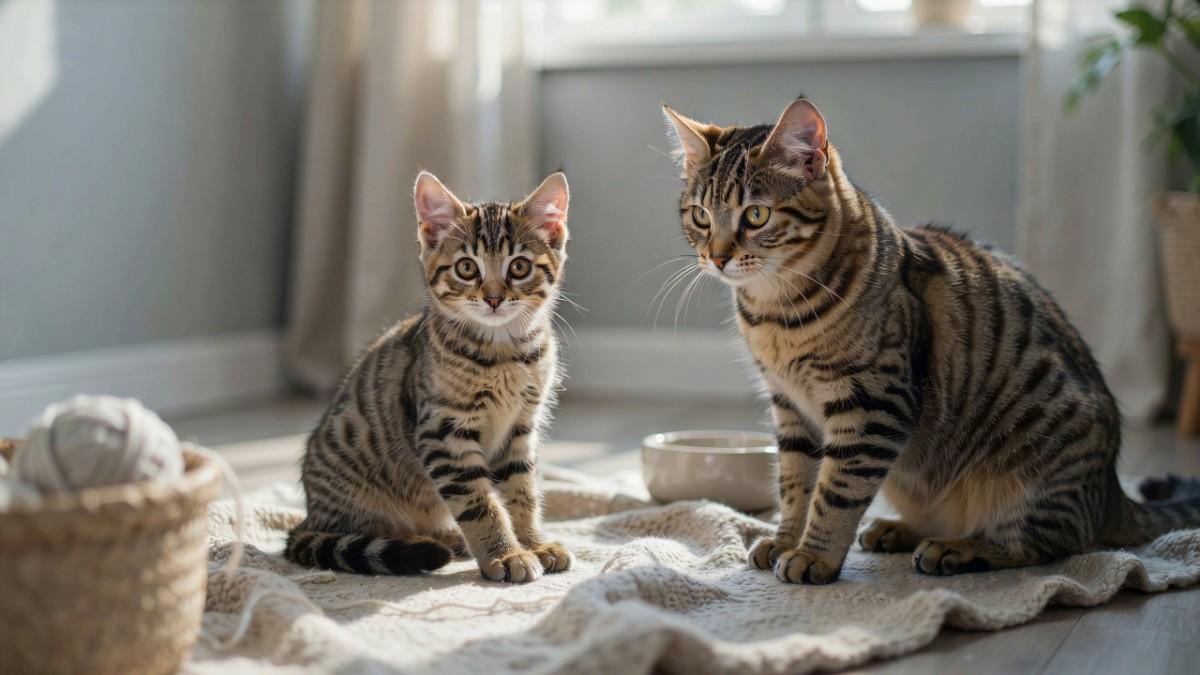
- Their paws and ears finally “match” their body. Kittens often look a little awkward, with oversized paws or ears compared to their frame. When everything looks proportional, growth has usually leveled off.
- Appetite becomes more predictable. Growing kittens are often ravenous. A steadier, more consistent appetite often signals the growth spurt has passed.
- Bone structure feels firm, not soft. Your vet can check this during a routine exam by feeling the joints and, if needed, taking an X-ray to look at growth plate closure.
- Behavior settles slightly. This one is not scientific, but many owners notice their cat’s wild kitten energy mellows out around the same time physical growth slows.
If you want a precise answer, weighing your cat on a home pet scale every few weeks and logging the numbers is the easiest do-it-yourself method. Once the number holds for a couple of months on a consistent diet, your cat has very likely reached adult size.
[Section Image: person gently weighing a cat on a home pet scale — see Image Prompts section]
What Affects How Big Your Cat Gets?
A handful of factors work together to determine your cat’s final size. None of them act alone.
Genetics
Just like people, cats inherit body type from their parents. If you know the size of your kitten’s mother and father, averaging the two gives a rough estimate of adult size.
Nutrition
A kitten fed a high-quality, protein-rich diet during the growth window will develop stronger bones and muscle than one on a poor diet. This does not mean overfeeding — extra calories after growth stops just turn into fat, not size.
Spay and Neuter Timing
Cats that are spayed or neutered later, after reaching sexual maturity, tend to grow slightly larger than those fixed very young. The difference is usually small but measurable.
Litter Size and Early Care
Kittens from very large litters sometimes had to compete harder for milk early on, which can slightly slow early development. Good early care tends to even this out over time.
Health Conditions
Parasites, chronic illness, or congenital conditions can all interfere with normal growth. If your kitten seems stalled or unusually small for their age, a vet visit is worth it to rule out an underlying issue.
Common Myths About Cat Growth
A lot of misinformation floats around about how cats grow. Clearing up a few of these myths can save you from unnecessary worry.
Myth: Big paws always mean a big cat. Large paws in a young kitten are a decent early clue, but they are not a guarantee. Some kittens simply have proportionally larger paws throughout their whole lives without growing into an especially large body.
Myth: A cat that looks “full grown” at 6 months is done growing. Many kittens hit an awkward, leggy-looking stage around 5 to 7 months where they can appear nearly full-sized. In reality, they usually still have months, sometimes years, of filling out left to do.
Myth: Overfeeding makes a cat grow bigger, not just fatter. Once the growth plates close, extra calories turn into body fat, not additional height or bone length. A cat that looks “big” from overfeeding is not actually more grown, just heavier.
Myth: All cats stop growing around the same age. As covered above, this varies enormously by breed. Treating every cat like a Maine Coon, or every Maine Coon like a domestic shorthair, leads to a lot of confused pet owners.
Caring for Your Cat Through Each Growth Stage
Your cat’s needs change as they move from kitten to adult, and getting the timing right supports healthy, steady development.
During active growth (0-12 months): Feed a kitten-formula food with higher protein, fat, and calcium. Schedule vaccine boosters roughly every 3 to 4 weeks until about 16 weeks old, then yearly wellness visits after that.
During the transition (10-18 months): Gradually shift to adult cat food over 7 to 10 days to avoid stomach upset. Keep an eye on weight to catch overfeeding early, since metabolism slows once growth stops.
Once fully grown: Annual wellness exams, consistent portion sizes, and regular play are usually enough to keep a healthy adult cat in good shape for years.
[Section Image: adult cat eating from a bowl next to a bag of adult cat food, cozy home kitchen setting — see Image Prompts section]
What This Means for US Cat Owners
Growth timing has a few practical effects worth knowing about if you live in the US. Routine kitten wellness visits, which most American Animal Hospital Association-affiliated clinics recommend every 3 to 4 weeks through 16 weeks of age, typically run in the range most US pet owners budget for as part of first-year cat ownership costs. Knowing roughly when your kitten will taper off from rapid growth also helps you time the switch to adult food, which can meaningfully affect your monthly pet food spending since kitten formula tends to cost more per pound than standard adult formulas.
It is also worth checking with your vet about growth-plate X-rays if you have a giant breed like a Maine Coon, since confirming skeletal maturity before spay or neuter surgery is a conversation many US vets are now having with owners of large-breed cats.
Conclusion
There is no single magic birthday when every cat stops growing. Small and medium cats are usually done between 12 and 18 months, while giant breeds like the Maine Coon can take up to five years to reach their full size. Genetics, diet, and whether your cat is spayed or neutered all play a role in the final number.
The most reliable way to know for sure is simple: track your cat’s weight over a few months, watch for that proportional, “finished” look, and talk to your vet if anything seems off. Every cat’s timeline is a little different, and that is part of what makes watching them grow up so much fun.
Hi, I’m Sana Sajid!I’m the voice behind CatsCare.blog, sharing my 10+ years of hands-on cat care experience. With a diploma in animal care, I offer practical tips, trusted advice, and easy-to-follow guides to help keep your cats healthy and happy.
When I’m not writing, I spend time with my own cats or exploring the latest developments in feline health. Follow CatsCare.blog for expert insights and real cat stories!
![A beautiful tabby cat with amber eyes sitting with its paw up, used to illustrate content discussing the reasons for feline salivation and answering [Why do Cats Drool].](https://catscare.blog/wp-content/uploads/2025/12/Why-do-Cats-Drool.jpg)