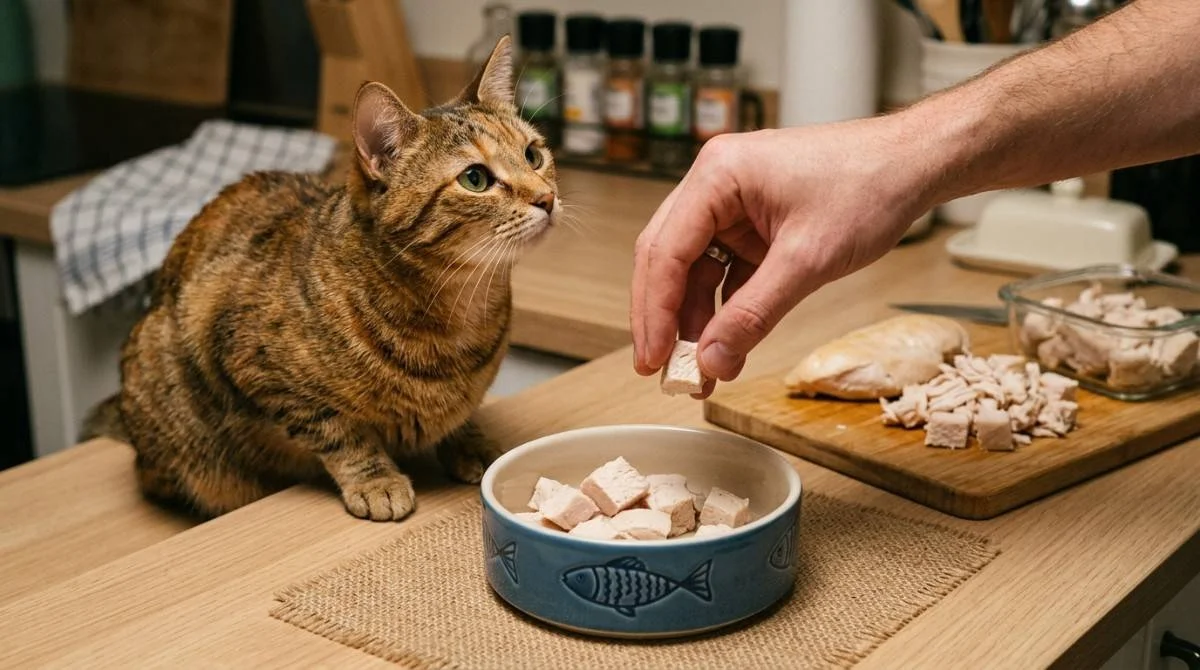
Can cats eat chicken? Yes but only if it’s cooked right. Learn safe portions, hidden risks, and vet tips before you feed your cat chicken.
Can Cats Eat Chicken?
Can cats eat chicken? Yes, cats can eat chicken. It is one of the safest and healthiest human foods for cats when you cook it the right way. Chicken is packed with lean protein, and most cats absolutely love it. But before you drop a piece from your dinner plate into your cat’s bowl, there are a few important rules to know. Some ways of feeding chicken are safe. Others can make your cat very sick. In this guide, we will break down everything you need to know from raw chicken dangers to the exact portion size your cat should eat.
Chicken shows up in almost every US household kitchen. So it makes sense that cat owners across the country from New York apartments to Texas ranches wonder if it’s okay to share. The short answer is yes. The full answer takes a little more explaining. Let’s dig in.
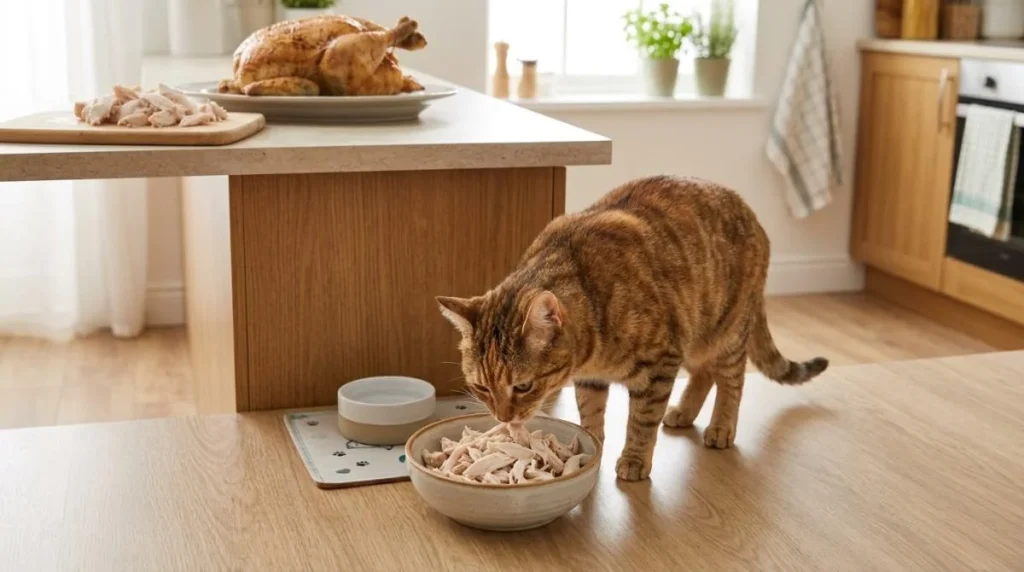
Quick Comparison: Which Chicken Is Safe for Cats?
Here’s a simple table you can check anytime you’re not sure what type of chicken to feed your cat.
| Type of Chicken | Safe for Cats? | Why |
|---|---|---|
| Plain cooked chicken breast | Yes | Lean, low fat, easy to digest |
| Boiled or baked chicken (no skin) | Yes | Safe and gentle on the stomach |
| Raw chicken | No | Risk of Salmonella and E. coli |
| Chicken bones (cooked) | No | Can splinter and cause choking |
| Fried chicken | No | Too much fat and oil |
| Chicken nuggets | No | High in salt, breading, and fat |
| Seasoned chicken (garlic, onion) | No | Garlic and onion are toxic to cats |
| Plain chicken broth (low sodium) | Yes, in small amounts | Good for hydration, must be salt-free |
| Chicken skin | Avoid | High fat, hard to digest |
| Canned chicken (unsalted) | Occasionally | Fine in small amounts, watch sodium |
Is Chicken Good for Cats?
Cats are obligate carnivores. This means their bodies need meat to survive. They can’t live well on just plants or grains. This is why chicken fits so well into a cat’s natural diet.
Chicken gives your cat:
- High-quality protein for strong muscles
- Amino acids that support heart and eye health
- Vitamin B6 for energy and brain function
- Selenium to support the immune system
- Phosphorus for healthy bones and teeth
Even wild cats, like lions and bobcats, eat birds in nature. So it’s no surprise your house cat has a natural craving for chicken too.
However, chicken alone is not a complete meal. It’s missing an important nutrient called taurine in the right balance, along with other vitamins your cat needs daily. That’s why chicken should be a treat or topper not a replacement for your cat’s regular cat food.
The 10% Rule
Veterinarians recommend that treats, including chicken, make up no more than 10% of your cat’s daily calories. The other 90% should come from a complete and balanced cat food. This keeps your cat’s diet nutritionally sound while still letting them enjoy a chicken treat now and then.
Can Cats Eat Raw Chicken?
No. Cats should not eat raw chicken.
This is one of the most common questions cat owners ask, and it’s an important one. While some raw-diet supporters say raw chicken is “natural,” raw chicken carries real risks. It can contain Salmonella and E. coli, harmful bacteria that can make your cat sick.
Even worse, these bacteria can spread to you and your family too. This is especially risky in homes with kids, older adults, or anyone with a weak immune system.
The CDC, the FDA, and the American Veterinary Medical Association (AVMA) all advise against feeding raw meat to pets. If you want to feed your cat chicken, cook it fully first. This single step removes almost all the risk.
Can Cats Eat Chicken Bones?
No. Never give your cat chicken bones, cooked or raw.
Cooked chicken bones are especially dangerous. They become brittle and can splinter into sharp pieces. These sharp pieces can:
- Get stuck in your cat’s throat
- Cut the mouth or esophagus
- Puncture the stomach or intestines
- Cause a blockage that needs emergency surgery
Even small bones from chicken wings or drumsticks are a serious choking hazard. Always remove every bone before giving chicken to your cat, no matter how small.
Can Cats Eat Chicken Skin?
It’s best to avoid chicken skin. It’s high in fat, and too much fat can upset your cat’s stomach or lead to a painful condition called pancreatitis. If your cat sneaks a small bite of skin once, don’t panic. But don’t make it a habit.
Can Cats Eat Chicken Broth?
Yes, in small amounts. Plain, unsalted chicken broth is safe for most cats. It can even help cats who don’t drink enough water, since it adds moisture to their diet.
Just make sure the broth has:
- No salt or very low sodium
- No onion or garlic
- No added spices or seasoning
The safest option is to make your own broth at home so you know exactly what’s in it.
How Much Chicken Can Cats Eat?
Portion size depends on your cat’s size, age, and weight. Here’s a simple guide most vets recommend:
- Kittens under 6 months: About 2 teaspoons of cooked chicken per day, cut very small
- Adult cats: About 1–2 tablespoons of cooked chicken per day
- Senior cats: Similar to adults, but check with your vet if your cat has kidney or health issues
Always start with a small piece the first time. Watch how your cat reacts before giving more.
How to Safely Prepare Chicken for Your Cat
Follow these simple steps every time:
- Choose plain chicken breast or thigh meat. Skip seasoned or store-bought cooked chicken.
- Cook it fully. Boil or bake until there’s no pink left inside.
- Remove all skin, fat, and bones. Every single bone, even tiny ones.
- Let it cool. Hot food can burn your cat’s mouth.
- Cut it into small, bite-sized pieces. This helps prevent choking, especially for kittens and senior cats.
- Serve plain. No butter, oil, garlic, onion, or salt.
This method works whether you’re making a topper for their food bowl or a stand-alone treat.
Chicken Allergies in Cats
Chicken is a common food allergen for cats, even though it’s also a common ingredient in cat food. Watch for these signs:
- Itchy skin or excessive scratching
- Ear infections that keep coming back
- Vomiting or diarrhea after eating
- Hair loss or red, irritated skin
If you notice these signs, talk to your vet. They may suggest an elimination diet to find out exactly what’s causing the reaction. Don’t try to diagnose a chicken allergy on your own — a vet visit is the safest route.
My Cat Ate Too Much Chicken What Do I Do?
Try to stay calm. Eating too much plain chicken usually isn’t a medical emergency. Watch for:
- Vomiting
- Diarrhea
- Low appetite
- A bloated or uncomfortable belly
These symptoms usually go away within 24 hours. You can offer smaller meals and plenty of water while your cat’s stomach settles.
Call your vet right away if:
- Your cat ate chicken bones
- The chicken was fried, seasoned, or cooked with onion or garlic
- Your cat ate a large amount of chicken skin or fat
- Vomiting continues past 24 hours
If your vet isn’t available, you can call the Pet Poison Helpline at 855-764-7661 for guidance on whether an emergency vet visit is needed.
A Local Note for US Cat Owners
In warmer US states like Florida, Texas, and the Southeast, cooked chicken can spoil fast, sometimes in under two hours if left out in summer heat. Always refrigerate leftover chicken right away and never leave your cat’s chicken treat sitting out on a warm porch or kitchen counter. The USDA’s Food Safety and Inspection Service recommends treating pet food with the same care as food for the whole family, especially chicken, which spoils quickly once cooked.
Final Thoughts
So, can cats eat chicken? Absolutely — and most cats love it. Plain, cooked, boneless chicken is one of the best treats you can share with your feline friend. It’s packed with protein and nutrients that support your cat’s health. Just remember the key rules: cook it fully, skip the bones and skin, avoid seasoning, and keep portions small. Follow these steps, and chicken can be a safe, tasty bonus in your cat’s diet for years to come.
FAQS
Can cats eat chicken every day?
Yes, cats can eat a small amount of plain cooked chicken every day. It should stay under 10% of their daily calories, with the rest coming from complete cat food.
2. Can cats eat chicken breast?
Yes, chicken breast is one of the safest and leanest cuts of chicken for cats. Cook it fully, remove the skin and bones, and cut it into small pieces.
3. Can kittens eat chicken?
Yes, kittens over 4 weeks old can eat small amounts of plain, cooked chicken cut into tiny pieces. Kittens under 6 months should have no more than 2 teaspoons per day.
4. Can cats eat rotisserie chicken?
No, rotisserie chicken is usually too salty and seasoned for cats. Stick to plain chicken you cook yourself without spices or added salt.
5. Can cats eat chicken liver?
Yes, cats can eat small amounts of cooked chicken liver occasionally. It’s rich in vitamin A, but too much can cause vitamin A toxicity, so limit it to a rare treat.
6. Is raw chicken safe for cats?
No, raw chicken is not safe for cats. It can carry Salmonella and E. coli, which can make both cats and humans in the home sick.

Hi, I’m Sana Sajid!I’m the voice behind CatsCare.blog, sharing my 10+ years of hands-on cat care experience. With a diploma in animal care, I offer practical tips, trusted advice, and easy-to-follow guides to help keep your cats healthy and happy.
When I’m not writing, I spend time with my own cats or exploring the latest developments in feline health. Follow CatsCare.blog for expert insights and real cat stories!
![A tabby cat is captured mid-air, running across a living room rug at night, suggesting high energy, with the text "WHY DO CATS GET ZOOMIES AT NIGHT? 7 SURPRISING REASONS" superimposed. [Why do Cats Get Zoomies at Night]](https://catscare.blog/wp-content/uploads/2025/11/Why-do-Cats-Get-Zoomies-at-Night.jpg)
![A close-up profile of an orange tabby cat's eye, used to help pet owners understand [Why can I see my Cat’s third Eyelid].](https://catscare.blog/wp-content/uploads/2026/01/Why-can-I-see-my-Cats-third-Eyelid.jpg)
![An educational infographic titled "Why Can’t Cats Be Service Animals?" featuring a service dog and a house cat to explain why [Can’t Cats Be Service Animals].](https://catscare.blog/wp-content/uploads/2026/01/Cant-Cats-Be-Service-Animals.jpg)