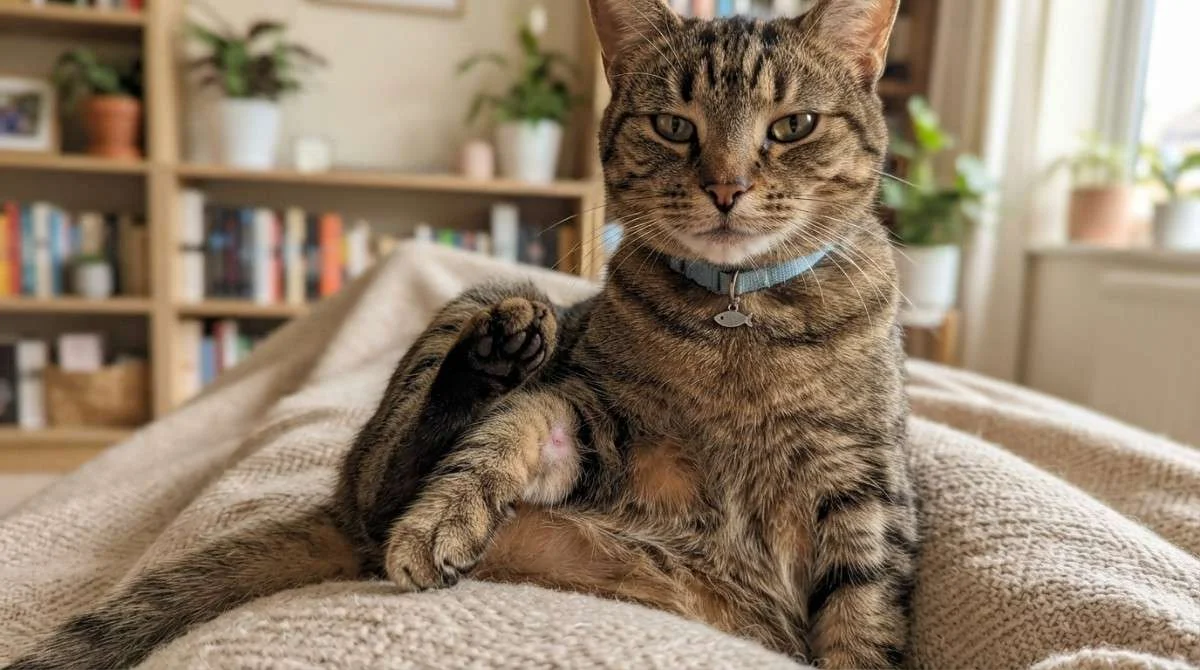
Learn the real Cat Allergy Symptoms, what causes them, and when to see a vet. Simple, expert-backed guide for US cat owners.
Cat Allergy Symptoms
If your cat won’t stop scratching, sneezing, or licking one spot raw, you’re probably searching for answers about allergy symptoms in cats. The good news is that cat allergies are common, and most of them are manageable once you know what to look for. Cats can react to things in their food, in the air, or even in their favorite plastic bowl. Some signs are easy to miss because they look like normal cat behavior at first. This guide walks you through every symptom, every type of allergy, and what to do next — in plain, simple language.
Across the United States, allergies in cats show up a little differently depending on where you live. A cat in humid Florida may struggle with mold and dust mites year-round. A cat in dry Arizona may react more to pollen in spring. A cat in the Midwest might flare up every fall with ragweed season. Knowing your region’s triggers can help you catch symptoms sooner.
Quick Comparison: Types of Cat Allergies
| Allergy Type | Common Trigger | Typical Symptoms | When It Shows Up |
|---|---|---|---|
| Environmental (Atopic) | Pollen, dust, mold, mildew | Itchy skin, red eyes, sneezing | Seasonal or year-round |
| Flea Allergy | Flea saliva | Intense itching near tail and back | After flea bites |
| Food Allergy | Beef, chicken, dairy, fish | Itchy face/ears, vomiting, diarrhea | Anytime, even with old food |
| Contact Allergy | Plastic bowls, fabrics, cleaners | Chin acne, skin redness at contact spot | After touching the item |
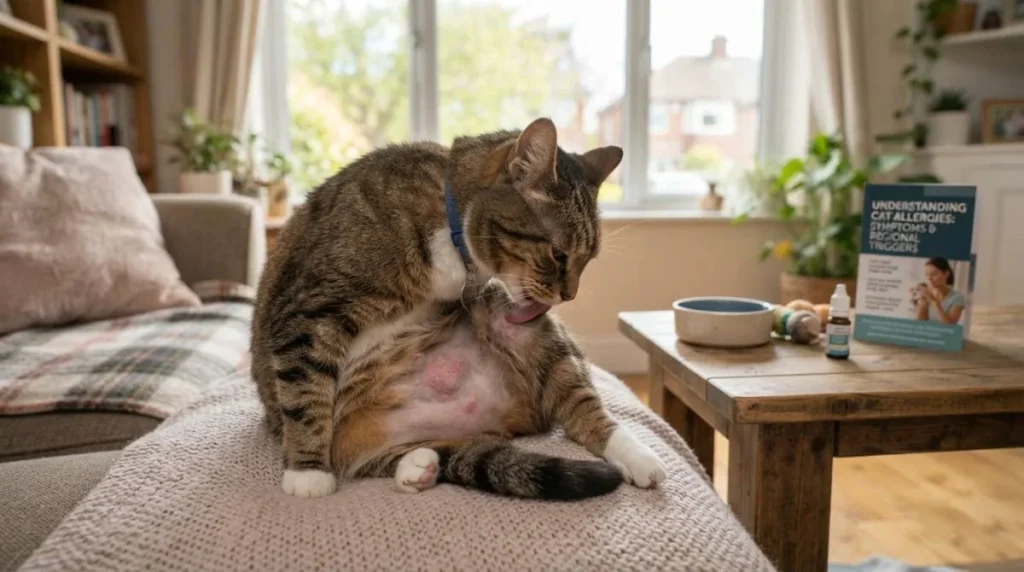
What Are Allergies in Cats?
An allergy happens when a cat’s immune system overreacts to something that isn’t actually dangerous. Think of pollen, pet dander, dust mites, or a protein in food. The immune system treats it like a threat and releases chemicals like histamine. This causes swelling, redness, and itching.
Allergies are not the same as a cold or an infection. They tend to come back again and again, especially during certain seasons or after eating certain foods. Many cats live with allergies for their whole lives, but with the right care, they can still feel comfortable and happy.
The Most Common Allergy Symptoms in Cats
Cat allergy symptoms don’t always look the same. Some cats scratch a lot. Others sneeze. Some have tummy trouble. Here’s how to spot the signs, grouped by where they show up on your cat’s body.
1. Skin Symptoms (Most Common)
Skin problems are the number one sign of allergies in cats. Watch for:
- Itchy skin or nonstop scratching
- Red or inflamed patches
- Hair loss, especially on the belly, legs, or neck
- Scabs or small bumps (sometimes called miliary dermatitis)
- Bald spots from excessive grooming or licking
If your cat is chewing one spot until it bleeds, this is a sign the itch has become severe.
2. Ear Symptoms
Allergies often lead to ear irritation. Look for:
- Head shaking
- Scratching at the ears
- Redness inside the ear
- A bad smell coming from the ear
- Dark, waxy buildup
Ear infections caused by allergies can come back again and again if the root allergy isn’t managed.
3. Eye and Nose Symptoms
Less common than skin issues, but still important:
- Watery or red eyes
- Squinting
- Sneezing
- Runny nose
- Rubbing the face on furniture
4. Digestive Symptoms
Food allergies often show up in the stomach, not just the skin. Signs include:
- Vomiting
- Diarrhea
- Gas or bloating
- Sudden pickiness about food
Beef and chicken are two of the most common food triggers for cats, even in foods they’ve eaten for years.
5. Respiratory Symptoms
These are less common but more serious. They include:
- Coughing
- Wheezing
- Open-mouth breathing
- Fast or labored breathing
If your cat is breathing hard or has pale gums, this is an emergency. Get to a vet right away.
6. Behavior Changes
Sometimes the first sign of an allergy isn’t physical at all. Your cat might:
- Hide more than usual
- Seem restless or irritable
- Avoid a certain food or area
- Groom one spot over and over
Cats can’t tell us they feel itchy, so behavior changes are often their way of showing discomfort.
What Causes Allergy Symptoms in Cats?
There are four main types of allergies in cats. Each one has its own triggers and treatment path.
Environmental Allergies (Atopy)
These come from things in the air, like pollen, grass, mold spores, and dust mites. Some cats react only during pollen season. Others react all year, especially to indoor allergens like dust and mildew. This type is often genetic, meaning some breeds and family lines are simply more prone to it.
Flea Allergies
Cats aren’t allergic to fleas themselves — they’re allergic to flea saliva. Even one flea bite can cause days of intense itching. This is called Flea Allergy Dermatitis, and it’s one of the most preventable allergies since it’s controlled with regular flea prevention.
Food Allergies
Food allergies are less common than most people think, but they do happen. A cat can suddenly become allergic to a food they’ve eaten for years. The most common triggers are animal proteins like beef, chicken, and fish. Finding the cause usually requires a special diet trial guided by your vet.
Contact Allergies
This is the rarest type. It happens when a cat’s skin touches something that irritates it directly, like a plastic food bowl, certain fabrics, or cleaning products. A classic example is “chin acne” from a plastic bowl rubbing against the chin every day.
Regional Allergy Triggers Across the US
Where you live in the United States can affect what your cat is allergic to.
- Southeast (Florida, Georgia, Louisiana): High humidity means more mold and dust mites year-round.
- Southwest (Arizona, Nevada, Texas): Dry climates bring strong pollen seasons and dust.
- Midwest (Ohio, Illinois, Michigan): Ragweed and grass pollen peak in late summer and fall.
- Northeast (New York, Massachusetts): Tree pollen in spring and indoor heating dust in winter.
- Pacific Northwest (Washington, Oregon): Mold and damp conditions trigger allergies most of the year.
If your cat’s symptoms follow a pattern tied to the seasons where you live, environmental allergies are a likely cause.
Allergic Reaction vs. Allergy Symptoms: What’s the Difference?
It helps to understand two different situations:
- Chronic allergy symptoms build up slowly. Think ongoing itching, ear infections, or seasonal sneezing. These need long-term management.
- An acute allergic reaction happens fast, often within minutes of exposure to something like an insect sting or new medication. This can include facial swelling, hives, sudden vomiting, or trouble breathing. This is a true emergency.
Knowing the difference helps you decide whether to call your regular vet or head straight to an emergency clinic.
When Should You See a Vet?
Call your vet if your cat has:
- Ongoing itching or scratching for more than a few days
- Hair loss or skin sores
- Repeated ear infections
- Digestive upset that doesn’t go away
Go to an emergency vet immediately if your cat has:
- Trouble breathing
- Sudden facial swelling
- Collapse or extreme weakness
- Pale or bluish gums
How Vets Diagnose Cat Allergies
Your vet will usually start by ruling out other causes, like fleas, mites, or infections. From there, they may recommend:
- A skin or ear swab to check for infection
- A flea comb check
- A food elimination diet lasting 8 to 12 weeks
- Blood or skin allergy testing for environmental triggers
Diagnosis takes patience, but it’s the best way to find lasting relief for your cat.
How Are Cat Allergies Treated?
There’s no permanent cure for allergies, but there are many ways to manage them:
- Flea prevention year-round, even for indoor cats
- Prescription medications like antihistamines or anti-itch treatments from your vet
- Special diets using novel or hydrolyzed proteins
- Medicated shampoos to soothe irritated skin
- Immunotherapy (allergy shots) for long-term environmental allergy control
- Omega-3 supplements to support skin health
Every cat responds differently, so your vet may combine a few of these methods to find what works best.
Simple Ways to Reduce Allergy Triggers at Home
- Vacuum and dust often to cut down on dust mites
- Use a HEPA air filter to trap pollen and mold spores
- Wash your cat’s bedding weekly in hot water
- Keep your cat on a monthly flea preventive
- Avoid scented candles, sprays, or strong-smelling cleaners
- Switch to a ceramic or stainless steel food bowl instead of plastic
Small changes at home can make a big difference in how often your cat’s symptoms flare up.
FAQS
Hi, I’m Sana Sajid!I’m the voice behind CatsCare.blog, sharing my 10+ years of hands-on cat care experience. With a diploma in animal care, I offer practical tips, trusted advice, and easy-to-follow guides to help keep your cats healthy and happy.
When I’m not writing, I spend time with my own cats or exploring the latest developments in feline health. Follow CatsCare.blog for expert insights and real cat stories!
![A beautiful tabby cat with amber eyes sitting with its paw up, used to illustrate content discussing the reasons for feline salivation and answering [Why do Cats Drool].](https://catscare.blog/wp-content/uploads/2025/12/Why-do-Cats-Drool.jpg)