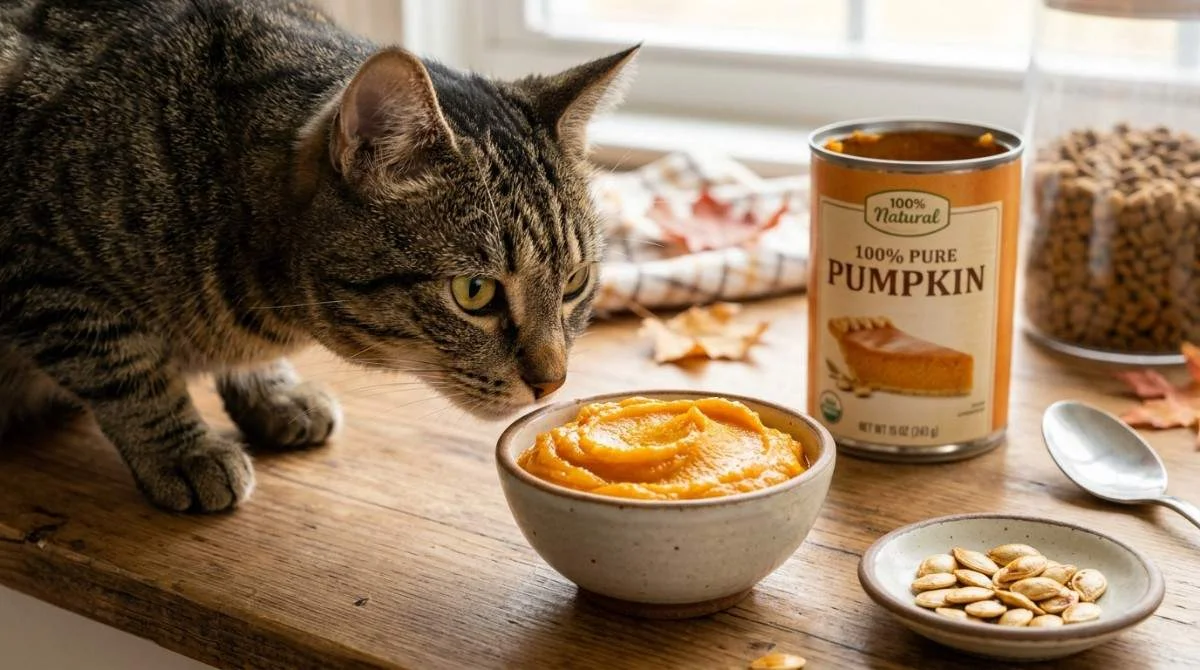
Can cats eat pumpkin? Yes, in small amounts. Learn safe ways to feed it, how much to give, and risks to avoid — vet-informed tips inside
Can Cats Eat Pumpkin
Can cats eat pumpkin? Yes, they can. Plain, cooked pumpkin is safe for most cats and can even help with tummy trouble, hairballs, and healthy digestion. But not every type of pumpkin is safe, and giving too much can cause problems. In this guide, we will walk you through everything you need to know — from pumpkin puree to pumpkin seeds, safe serving sizes, and what to avoid completely. Whether you found a pumpkin patch near you this fall or just have a can of pure pumpkin in your pantry, this article will help you feed your cat the right way.
Cats across the United States often get curious around Halloween and Thanksgiving, when pumpkin shows up everywhere — pies, lattes, and porch decorations. It is normal to wonder if you can share a little with your feline friend. The good news is you can, as long as you follow a few simple rules.
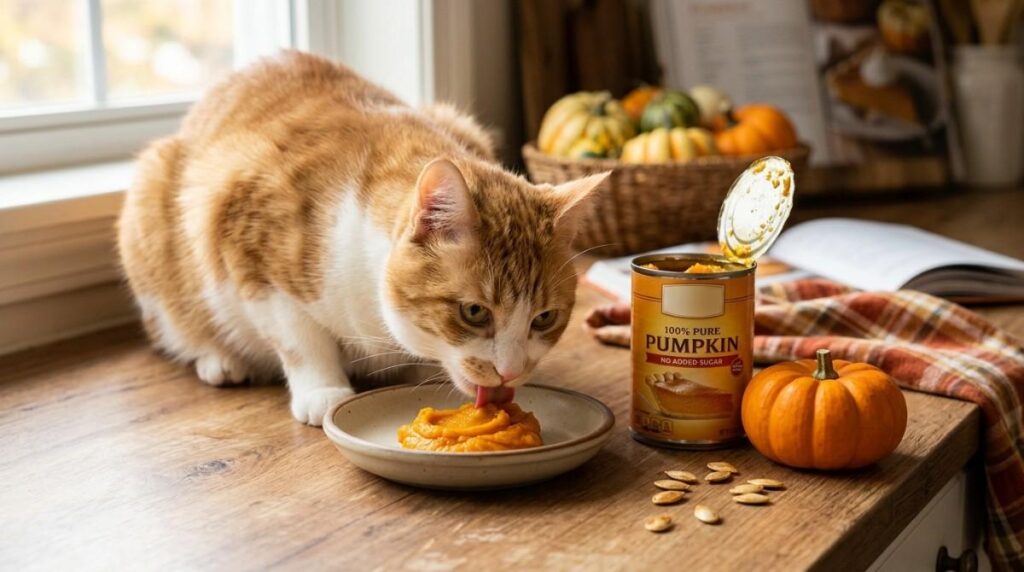
Quick Comparison: What Kind of Pumpkin Is Safe for Cats?
| Pumpkin Type | Safe for Cats? | Why |
|---|---|---|
| Plain cooked pumpkin | Yes | Easy to digest, full of fiber |
| 100% canned pure pumpkin | Yes | No added sugar or spices |
| Roasted, plain pumpkin seeds (crushed) | Yes, in small amounts | Good fats, but choking risk if whole |
| Raw pumpkin flesh | Not recommended | Hard to digest, may upset stomach |
| Pumpkin pie filling | No | Contains sugar and spices like nutmeg |
| Pumpkin pie or dessert | No | Too much sugar, dairy, and spice |
| Pumpkin stem or skin | No | Choking hazard, tough to che |
Is Pumpkin Good for Cats?
Yes, pumpkin can be good for cats when you serve it the right way. It is low in calories and packed with fiber, vitamin A, vitamin C, potassium, and water. These nutrients can support your cat’s digestive health without adding many calories.
Cats are what vets call obligate carnivores. This means their bodies are built mainly to eat meat. Pumpkin is not a replacement for meat. Think of it as a small extra, not a main meal. A spoonful now and then is enough. It should never replace your cat’s regular cat food.
Why Do Vets Recommend Pumpkin for Cats?
This is why pumpkin is often suggested for cats experiencing mild constipation or occasional diarrhea. It may also help some cats feel fuller, making it useful as part of a veterinarian-approved weight management plan.
- Mild constipation
- Occasional diarrhea
- Frequent hairballs
- A need for gentle weight support
Pumpkin is not a cure for serious health problems. If your cat’s symptoms last more than a day or two, call your vet.
Can Cats Eat Pumpkin Seeds?
Yes, cats can eat pumpkin seeds, but only in small, safe amounts. Whole seeds can be a choking hazard, especially if your cat eats fast. The safest way is to roast the seeds plain (no oil, salt, or seasoning) and crush them into small pieces before serving.
How to Prepare Pumpkin Seeds Safely
- Wash the seeds and remove any pulp.
- Roast them plain, with nothing added.
- Let them cool completely.
- Crush or grind them into a fine texture.
- Sprinkle a small pinch over your cat’s regular food.
Never give a cat seasoned, salted, or oiled seeds. These extras can hurt your cat’s stomach and add unhealthy fat
Is Pumpkin Good for Cats With an Upset Stomach?
Yes, pumpkin can help settle mild digestive upset in many cats. It works for two opposite problems at once, which surprises a lot of pet owners.
Pumpkin for Constipated Cats
Pumpkin has water and fiber. Together, they help stool move more easily through the gut. Many vets suggest a small amount of canned pumpkin mixed into wet food for constipated cats.
Pumpkin for Cats With Diarrhea
The same fiber that helps constipation can also firm up loose stool. This is because fiber absorbs extra water in the intestines. If your cat’s diarrhea does not improve within 24 to 48 hours, contact your veterinarian right away. Pumpkin should support treatment, not replace it.
How Much Pumpkin Can I Give My Cat?
Portion size matters. Too much pumpkin, even the safe kind, can cause an upset stomach. Here is a simple breakdown by cat size:
| Cat Size | Suggested Daily Amount |
|---|---|
| Small cat (under 8 lbs) | ¼ to ½ teaspoon |
| Medium cat (8–12 lbs) | ½ to 1 teaspoon |
| Large cat (over 12 lbs) | 1 to 2 teaspoons |
Start with the smallest amount first. Watch how your cat reacts over the next day. If all goes well, you can keep it as an occasional treat, not a daily habit.
Signs You Are Giving Too Much Pumpkin
- Loose or watery stool
- Loss of appetite
- Bloating or a swollen belly
- Vomiting
If you see any of these signs, stop feeding pumpkin and call your vet.
Can Kittens Eat Pumpkin?
Kittens can have a very small taste of pumpkin, but only with care. Their digestive systems are still growing and more sensitive than an adult cat’s. A tiny amount, about a quarter teaspoon, mixed into food is plenty. Always check with your vet first, especially if your kitten is still nursing or newly weaned.
Can Cats Eat Pumpkin Pie?
No, cats should not eat pumpkin pie. Pumpkin pie is made with sugar, dairy, and spices such as nutmeg and cinnamon. Nutmeg can be toxic to cats in larger amounts and may cause vomiting, a fast heart rate, or even nervous system problems. A tiny lick likely will not hurt your cat, but a full bite of pie is never a good idea. Stick to plain, unsweetened pumpkin only.
What About Pumpkin Spice Lattes?
Keep these away from your cat completely. They contain sugar, dairy, caffeine, and spices — none of which are safe or healthy for cats.
Raw vs. Cooked Pumpkin: Which Is Safer?
Cooked pumpkin is always the safer choice. Raw pumpkin flesh is tough and harder for a cat’s stomach to break down. It can also carry more risk of an upset stomach. Cooking softens the pumpkin and makes the fiber easier to digest. Always remove the skin, stem, and seeds unless you are giving crushed, roasted seeds separately.
Local Angle: Feeding Pumpkin to Cats in the US
Pumpkin season peaks across the United States from September through November, right around Halloween and Thanksgiving. Many US grocery stores sell canned, 100% pure pumpkin puree year-round in the baking aisle, so you do not need to wait for fall to try it. Always double-check the label. Look for cans that say “100% pure pumpkin” and avoid anything labeled “pumpkin pie filling,” since that version contains added sugar and spices not meant for pets.
If you live somewhere with a local pumpkin patch or farmers market, fresh pie pumpkins (not decorative carving pumpkins treated with chemicals) can also be cooked plain and offered in small amounts. The American Society for the Prevention of Cruelty to Animals (ASPCA) lists pumpkin as a pet-safe food when served plain, which supports what vets across the country generally recommend.
If you are ever unsure, your local veterinarian is always the best resource. They know your cat’s health history and can give advice made just for your pet.
Common Mistakes Cat Owners Make With Pumpkin
- Giving pumpkin pie or pumpkin spice products instead of plain pumpkin
- Feeding whole, uncrushed pumpkin seeds
- Offering too much pumpkin at once
- Using pumpkin as a replacement for real cat food
- Not checking the can label for added sugar or spices
- Ignoring ongoing digestive issues instead of calling a vet
The Bottom Line
So, can cats eat pumpkin? Yes, plain and cooked pumpkin is safe and can even support your cat’s digestion when served in small amounts. Avoid pumpkin pie, raw pumpkin skin, and whole seeds. Start small, watch how your cat reacts, and always talk to your vet if you have questions about your cat’s diet.
FAQS
Can cats eat pumpkin?
Yes. Plain, cooked pumpkin or 100% pure canned pumpkin is safe for cats in small amounts and may help with digestion.
Can cats eat pumpkin seeds?
Yes, but only if the seeds are roasted plain, cooled, and crushed. Whole seeds can be a choking hazard.
How much pumpkin can I give my cat?
Start with ¼ to ½ teaspoon for small cats and up to 2 teaspoons for large cats, once a day at most.
Can cats eat pumpkin pie?
No. Pumpkin pie has sugar, dairy, and spices like nutmeg, which can upset a cat’s stomach or be toxic in larger amounts.
Is pumpkin good for cats with diarrhea or constipation?
Yes. The fiber in pumpkin can help firm up loose stool and ease mild constipation, but see a vet if symptoms continue.
Can kittens eat pumpkin?
Kittens can have a very small taste, about a quarter teaspoon, but only after checking with a veterinarian first.
Yes. Plain, cooked pumpkin or 100% pure canned pumpkin is safe for cats in small amounts and may help with digestion.
Yes, but only if the seeds are roasted plain, cooled, and crushed. Whole seeds can be a choking hazard.
Start with ¼ to ½ teaspoon for small cats and up to 2 teaspoons for large cats, once a day at most.
No. Pumpkin pie has sugar, dairy, and spices like nutmeg, which can upset a cat’s stomach or be toxic in larger amounts.
Yes. The fiber in pumpkin can help firm up loose stool and ease mild constipation, but see a vet if symptoms continue.
Kittens can have a very small taste, about a quarter teaspoon, but only after checking with a veterinarian first.
Hi, I’m Sana Sajid!I’m the voice behind CatsCare.blog, sharing my 10+ years of hands-on cat care experience. With a diploma in animal care, I offer practical tips, trusted advice, and easy-to-follow guides to help keep your cats healthy and happy.
When I’m not writing, I spend time with my own cats or exploring the latest developments in feline health. Follow CatsCare.blog for expert insights and real cat stories!
![A beautiful tabby cat with amber eyes sitting with its paw up, used to illustrate content discussing the reasons for feline salivation and answering [Why do Cats Drool].](https://catscare.blog/wp-content/uploads/2025/12/Why-do-Cats-Drool.jpg)