Can cats eat garlic? No it’s toxic in any form. Learn the real risks, warning signs, and what US vets say to do right now.
Can Cats Eat Garlic?
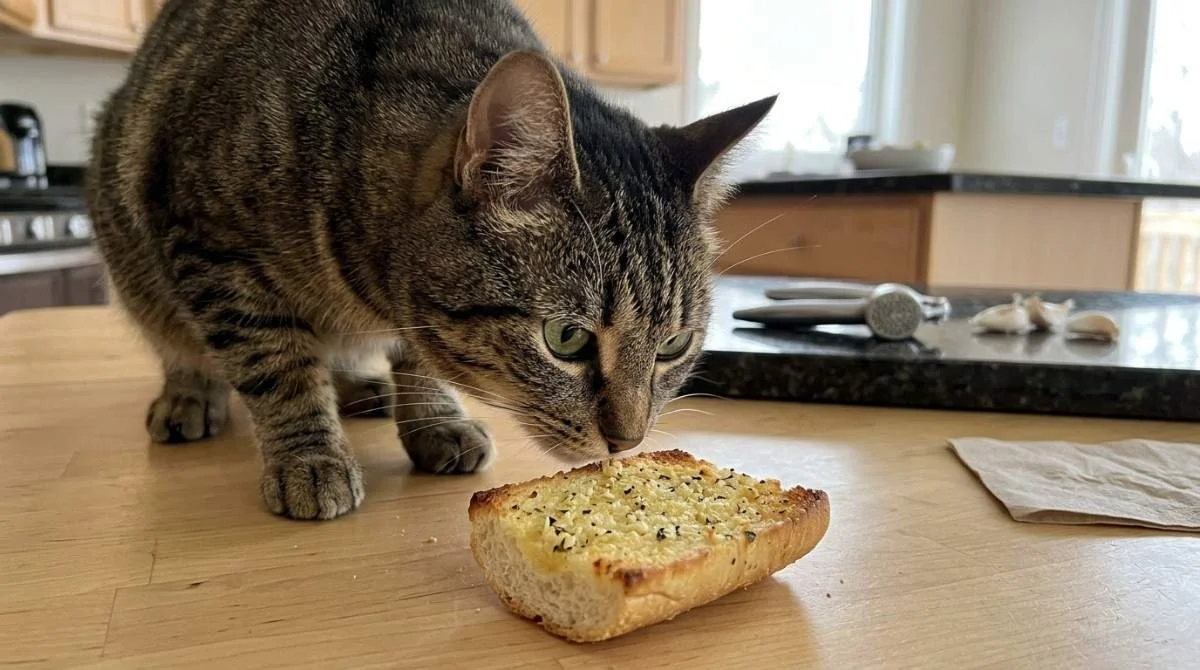
If you’ve ever dropped a piece of garlic bread and watched your cat sniff around it, you’ve probably asked yourself: can cats eat garlic? The short answer is no. Garlic is toxic to cats, even in small amounts, and it should never be part of your cat’s diet. This guide breaks down exactly why garlic is dangerous, how much can hurt your cat, what warning signs to watch for, and what to do right away if your cat eats it — all explained in simple, clear language.
Garlic might seem harmless. It’s just a kitchen staple, right? But for cats, garlic belongs to a group of plants that can quietly damage their blood. Understanding this risk could one day save your cat’s life.
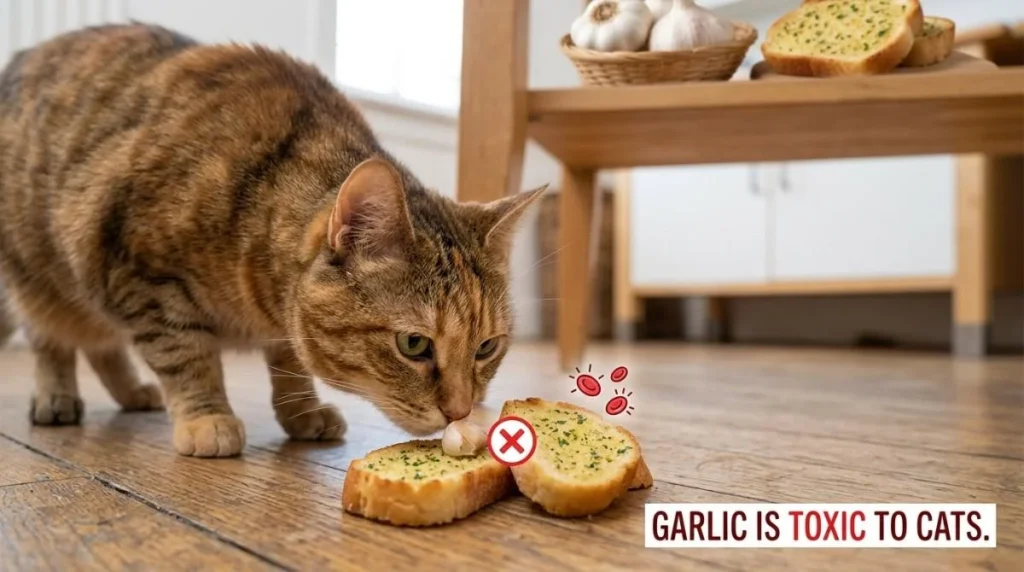
Garlic and Cats At a Glance
| Question | Answer |
|---|---|
| Can cats eat garlic? | No, never in any form |
| Is cooked garlic safer than raw? | No, cooking does not remove the toxin |
| How much garlic is toxic? | As little as one clove or ⅛ teaspoon of powder |
| How fast do symptoms show? | Often delayed 1–5 days after eating it |
| What should I do if my cat eats it? | Call your vet or a pet poison hotline right away |
| Is garlic more toxic than onion? | Yes, about 3–5 times more toxic |
Why Is Garlic Toxic to Cats?
Garlic belongs to a plant family called Allium. This family also includes onions, leeks, chives, and shallots. All of these allium vegetables contain compounds that are safe for people but harmful to cats.
Inside garlic is a substance that cat bodies cannot break down safely. Once eaten, it enters the bloodstream and attacks red blood cells. This can lead to a condition called hemolytic anemia, where red blood cells break apart faster than the body can make new ones.
Think of red blood cells as tiny delivery trucks. Their job is to carry oxygen around the body. When garlic damages them, fewer “trucks” are left to do the job. That means less oxygen reaches your cat’s organs, and that can make your cat very sick.
Cats Are More Sensitive Than Dogs or Humans
Cats have a unique body chemistry. Their red blood cells are more fragile than a dog’s or a person’s. This is why even a small taste of garlic can affect a cat far more than it would affect a larger animal. It’s also why vets often say garlic is a feline food hazard that deserves serious attention, not a “wait and see” approach.
Raw, Cooked, or Powdered Does the Form of Garlic Matter?
Many pet owners assume cooking garlic makes it safe. It does not. Whether it’s raw, roasted, boiled, or turned into a fine powder, garlic toxicity in cats works the same way.
In fact, garlic powder can be even more dangerous. It is more concentrated than a fresh clove, so a small sprinkle can pack a bigger punch. This is one reason seasoning blends, gravies, and packaged human foods are sneaky sources of danger for cats.
Garlic vs. Onion: Which Is Worse?
Garlic and onion are cousins in the same plant family, but garlic is the stronger threat. Most vets agree garlic is roughly three to five times more toxic to cats than onion, gram for gram. Neither one is ever safe to feed your cat.
How Much Garlic Is Dangerous for a Cat?
There is no truly “safe” amount of garlic for a cat. But the risk grows with the size of the dose compared to the cat’s body weight.
| Cat Weight | Amount That May Cause Harm |
|---|---|
| Small cat / kitten (5–7 lbs) | Less than one clove or a light sprinkle of powder |
| Average adult cat (8–10 lbs) | About one clove or ⅛ teaspoon of powder |
| Larger adult cat (11–15 lbs) | Slightly more, but still a small amount |
Even the smaller end of these amounts can cause real harm. A single clove of garlic, or as little as one-eighth of a teaspoon of garlic powder, can be enough to make a cat seriously ill. Bigger doses, or repeated small exposures over time, raise the danger even more.
Symptoms of Garlic Poisoning in Cats
One of the trickiest things about garlic poisoning in cats is that symptoms often don’t show up right away. Your cat might seem totally fine at first. That delay can trick owners into thinking nothing happened.
Early Signs (Within 24 Hours)
- Drooling or bad breath
- Upset stomach
- Vomiting
- Diarrhea
- Loss of appetite
Delayed Signs (1 to 5 Days Later)
- Weakness or unusual tiredness
- Pale or yellow gums
- Fast breathing or a racing heart
- Dark or red-tinted urine
- Collapse in severe cases
| Timeframe | What May Happen |
|---|---|
| 0–24 hours | Stomach upset, drooling, low appetite |
| 1–3 days | Tiredness, weakness, pale gums |
| 3–5 days | Red blood cell breakdown becomes most severe |
If your cat shows any of these signs after possibly eating garlic, don’t wait for things to get worse. Early care almost always leads to a better outcome.
Hidden Sources of Garlic in Everyday Foods
Garlic doesn’t just show up as a clove on your cutting board. It hides in many foods that seem harmless.
- Broths and soups (including some baby food, which owners sometimes give to sick cats)
- Seasoned or marinated meats
- Gravy and sauces
- Garlic bread and pizza crust
- Flavored crackers or chips
- Stock cubes and bouillon
- Some store-bought pet treats marketed as “natural” flea remedies
Because garlic blends into these foods, it’s easy for a cat to eat it without anyone noticing. A good rule of thumb: never share your plate with your cat unless you know every single ingredient.
What to Do If Your Cat Eats Garlic
If you catch your cat eating garlic, or you find chewed cloves and a guilty-looking cat nearby, act quickly.
- Do not wait for symptoms. By the time signs appear, damage may already be happening inside your cat’s body.
- Remove any leftover garlic so your cat cannot eat more.
- Call your veterinarian immediately and tell them what happened, how much you think your cat ate, and when.
- Contact a pet poison hotline if you cannot reach your vet right away. In the United States, you can call:
- ASPCA Animal Poison Control Center: (888) 426-4435
- Pet Poison Helpline: (855) 764-7661
- Do not try home remedies. There is no safe way to treat garlic poisoning at home. Inducing vomiting on your own can be dangerous without a vet’s guidance.
Most US emergency vet visits for suspected poisoning cost somewhere between $150 and $500, depending on tests needed and your location, though severe cases needing hospitalization can cost more. It’s a real expense, but it is far better than the alternative.
How Vets Diagnose and Treat Garlic Poisoning
When you bring your cat in, the vet will ask what happened and when. They will also check your cat’s body for signs of trouble.
Diagnosis
- A physical exam to check gum color and energy level
- Blood tests to look for damaged red blood cells and signs of anemia
- Sometimes a urine test to check for red blood cell breakdown
Treatment
Depending on how much garlic your cat ate and how soon you got help, treatment may include:
- Inducing vomiting, but only if it’s done quickly after eating, usually within about two hours
- Activated charcoal to soak up remaining toxins in the stomach
- IV fluids to support the body and flush out toxins
- Oxygen therapy if breathing is affected
- A blood transfusion in severe cases of anemia
Cats that get treated quickly, after eating only a small amount, often recover well. Cats that eat a large amount, or don’t get help right away, face a much higher risk of serious complications.
Are Some Cats More at Risk Than Others?
Yes. While garlic is unsafe for every cat, a few factors can make the danger worse:
- Kittens have smaller bodies, so even a tiny amount of garlic is a bigger dose relative to their size.
- Senior cats may have weaker organs that struggle to handle toxins.
- Cats with existing health conditions, especially anything affecting the blood, liver, or kidneys, may face greater risk.
- Certain breeds are believed by some vets to be more sensitive to Allium toxicity, though any cat, regardless of breed, can be seriously affected.
If your cat falls into any of these groups, treat garlic exposure as an emergency without hesitation.
Safe Alternatives to Garlic for Cats
It’s natural to want to add flavor or variety to your cat’s meals. Thankfully, there are cat-safe ways to do that.
- Plain, cooked chicken or turkey with no seasoning
- A small amount of plain cooked pumpkin
- Cat-safe wet food toppers made specifically for felines
- Catnip, in small amounts, as a fun treat instead of flavor
Always check with your vet before adding anything new to your cat’s diet, even something that seems harmless.
How to Prevent Garlic Poisoning at Home
Prevention is much easier than treatment. A few simple habits can keep your cat safe.
- Store garlic, onions, and other Allium plants in closed containers or cabinets your cat cannot open.
- Never leave seasoned food unattended on counters or tables.
- Read ingredient labels on treats, especially anything labeled “natural” or “herbal.”
- Keep the kitchen trash covered, since garlic scraps often end up there.
- Teach family members and guests not to share table food with your cat.
- Keep the ASPCA and Pet Poison Helpline numbers saved in your phone for quick access.
FAQS
1.Can kittens eat garlic bread?
No. Kittens are even more sensitive than adult cats to garlic’s toxic compounds, and garlic bread also contains butter, salt, and often onion or herbs that can upset a kitten’s stomach. Keep garlic bread away from kittens entirely.
2. What happens if a cat eats garlic?
Garlic contains thiosulfates, which damage a cat’s red blood cells and can cause a condition called hemolytic anemia. Symptoms don’t always show up right away — they can take a few days to appear after ingestion.
3. What are the symptoms of a cat eating garlic?
What happens if a cat eats garlic?
Garlic contains thiosulfates, which damage a cat’s red blood cells and can cause a condition called hemolytic anemia. Symptoms don’t always show up right away — they can take a few days to appear after ingestion.
What are the symptoms of a cat eating garlic?
Common signs include vomiting, diarrhea, lethargy, loss of appetite, pale or yellow gums, rapid breathing, and orange-to-dark-colored urine. These symptoms can appear anywhere from a few hours to several days after exposure.
4. My cat ate garlic and seems fine — is that normal?
A cat may show no symptoms after eating a small amount, especially early on, but that doesn’t mean no harm was done. Garlic toxicity is dose-dependent and cumulative, so it’s still worth watching your cat closely for several days and calling your vet to check.
5. What should I do if my cat eats garlic?
Contact your vet or an animal poison control hotline right away, and have details ready: how much garlic, what form (raw, powder, cooked), and your cat’s weight. Don’t try to induce vomiting at home unless a vet specifically tells you to.
6. Are there home remedies for a cat that ate garlic?
There’s no safe home remedy for garlic ingestion in cats — this isn’t a wait-and-see situation home care can fix. The safe move is professional veterinary guidance, since treatment may involve inducing vomiting, activated charcoal, or bloodwork monitoring depending on the amount eaten.
No. Kittens are even more sensitive than adult cats to garlic’s toxic compounds, and garlic bread also contains butter, salt, and often onion or herbs that can upset a kitten’s stomach. Keep garlic bread away from kittens entirely.
Item #1
2. What happens if a cat eats garlic?
Garlic contains thiosulfates, which damage a cat’s red blood cells and can cause a condition called hemolytic anemia. Symptoms don’t always show up right away — they can take a few days to appear after ingestion.
3. What are the symptoms of a cat eating garlic?
Garlic contains thiosulfates, which damage a cat’s red blood cells and can cause a condition called hemolytic anemia. Symptoms don’t always show up right away — they can take a few days to appear after ingestion.
Garlic contains thiosulfates, which damage a cat’s red blood cells and can cause a condition called hemolytic anemia. Symptoms don’t always show up right away — they can take a few days to appear after ingestion.
Common signs include vomiting, diarrhea, lethargy, loss of appetite, pale or yellow gums, rapid breathing, and orange-to-dark-colored urine. These symptoms can appear anywhere from a few hours to several days after exposure.
A cat may show no symptoms after eating a small amount, especially early on, but that doesn’t mean no harm was done. Garlic toxicity is dose-dependent and cumulative, so it’s still worth watching your cat closely for several days and calling your vet to check.
Contact your vet or an animal poison control hotline right away, and have details ready: how much garlic, what form (raw, powder, cooked), and your cat’s weight. Don’t try to induce vomiting at home unless a vet specifically tells you to.
There’s no safe home remedy for garlic ingestion in cats — this isn’t a wait-and-see situation home care can fix. The safe move is professional veterinary guidance, since treatment may involve inducing vomiting, activated charcoal, or bloodwork monitoring depending on the amount eaten.

Hi, I’m Sana Sajid!I’m the voice behind CatsCare.blog, sharing my 10+ years of hands-on cat care experience. With a diploma in animal care, I offer practical tips, trusted advice, and easy-to-follow guides to help keep your cats healthy and happy.
When I’m not writing, I spend time with my own cats or exploring the latest developments in feline health. Follow CatsCare.blog for expert insights and real cat stories!