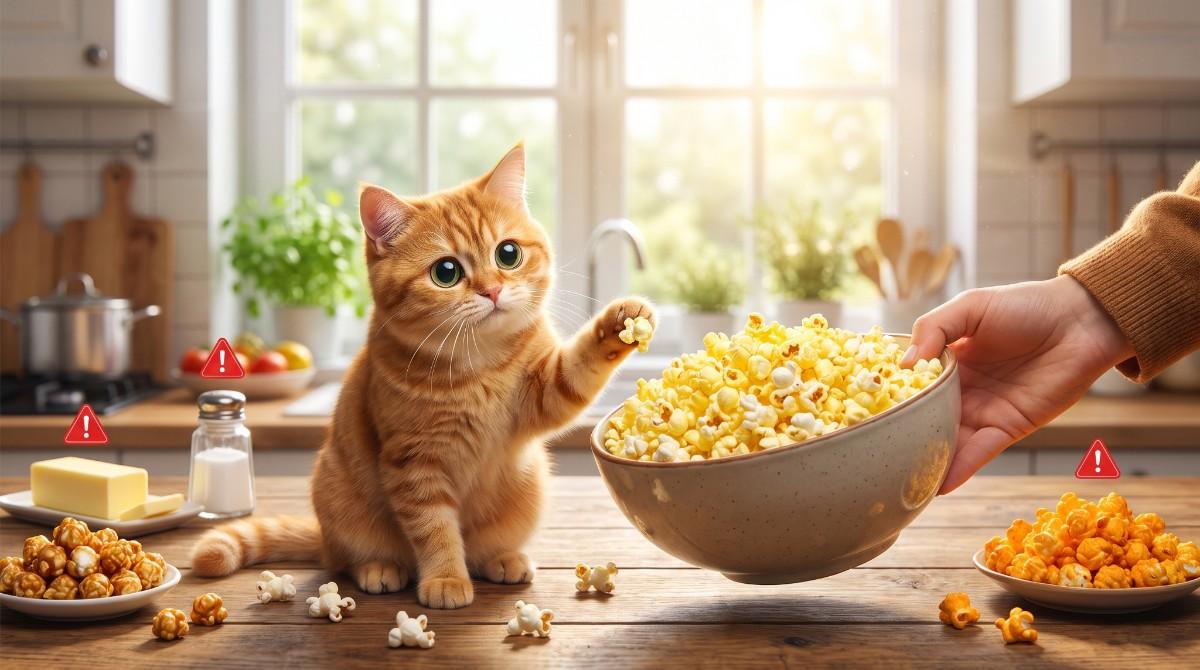
Can cats eat popcorn? Yes, in small amounts but some toppings are risky. Get vet-backed serving tips and safety facts inside.
Can Cats Eat Popcorn
You just settled onto the couch with a warm bowl of popcorn. Your cat jumps up, sniffs the air, and gives you that pleading stare. So can cats eat popcorn? The short answer is yes plain popcorn is generally safe for cats in small amounts, but many popular toppings can turn this movie-night snack into a health risk. This guide breaks down exactly what’s safe, what’s dangerous, and how much your cat should have.
Popcorn is one of America’s favorite snacks. It shows up at movie theaters, backyard game nights, and family couch marathons all across the United States. So it’s no surprise that curious cats often want a taste too. Before you toss a kernel their way, it helps to understand how a cat’s body handles this crunchy, carb heavy snack and where the real dangers hide.
Popcorn Safety at a Glance
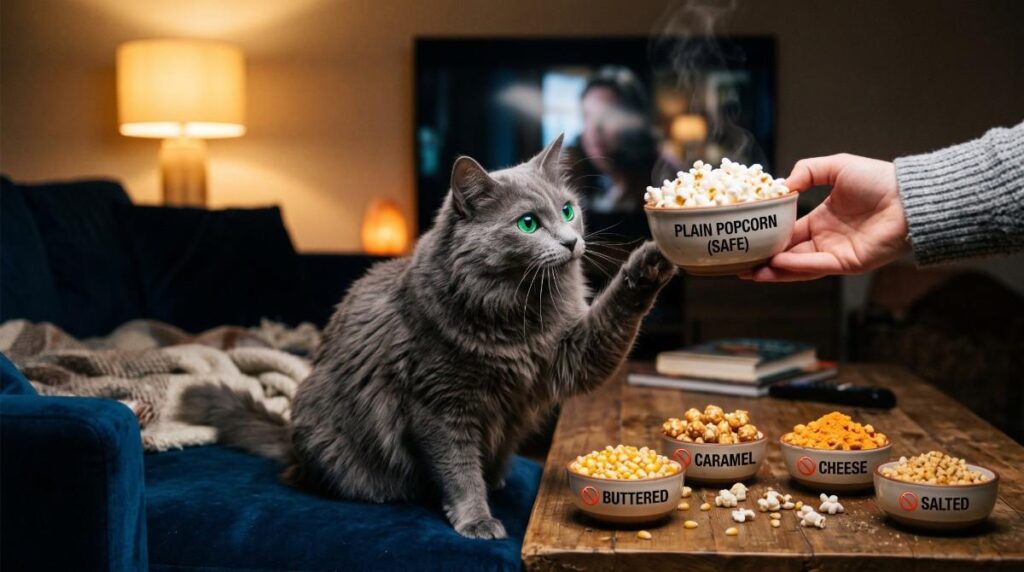
| Type | Safe for Cats? | Why |
|---|---|---|
| Plain, air-popped | Yes, in small amounts | Low risk, but no nutrition value |
| Movie theater (buttered) | No | High salt and fat can upset the stomach |
| Caramel-coated | No | Too much sugar, sticky choking risk |
| Cheese-flavored | No | High sodium and artificial flavoring |
| Unpopped kernels | No | Choking hazard and blockage risk |
| Garlic or onion powder seasoning | No | Toxic to cats, even in small doses |
Is Popcorn Toxic to Cats?
No, this crunchy snack is not toxic to cats. It’s not on the ASPCA’s list of dangerous foods. But “not toxic” doesn’t mean “healthy” or risk-free. Cats are obligate carnivores. Their bodies are built to run on meat, not carbohydrates like corn. It offers your cat almost no real nutrition mostly empty calories with a satisfying crunch.
The real danger isn’t the kernel itself. It’s what’s added to it, and how it’s served.
Why Cats Are Drawn to a Popcorn Bowl
Cats have a sharp sense of smell, and buttery, cheesy snacks smell like fat and salt scents that naturally appeal to a cat’s nose, even though their bodies aren’t built to process much of either. Your cat isn’t chasing nutrition. They’re chasing a rich, fatty aroma, plus the fun of batting a light, crunchy piece across the floor.
What Happens If a Can Cats Eat Popcorn?
For most healthy adult cats, a stray kernel or two of the plain, air-popped kind won’t cause harm. But eating too much, or eating a flavored version can lead to unpleasant side effects.
Mild Reactions to Watch For
- Upset stomach
- Vomiting
- Diarrhea
- Gas or bloating
Serious Risks
- Choking Unpopped or partially popped kernels are hard and small, making them easy to inhale or lodge in the throat.
- Intestinal blockage Kernels can get stuck in a cat’s digestive tract, especially in small cats or kittens, sometimes requiring emergency surgery.
- Salt poisoning Heavily salted servings can cause sodium ion toxicity, with symptoms like tremors, extreme thirst, and lethargy.
- Pancreatitis The high fat content in buttered versions can inflame a cat’s pancreas, especially with repeated exposure.
- Chocolate or garlic toxicity Some gourmet mixes include chocolate drizzle, garlic powder, or onion powder. All three are toxic to cats.
If your cat shows signs of choking, repeated vomiting, tremors, or extreme lethargy, contact your veterinarian right away. You can also call the ASPCA Animal Poison Control Center at (888) 426-4435 for immediate guidance.
Toppings: The Real Danger Zone
Plain kernels are fairly low-risk. The toppings are where things go wrong.
Butter and Oil
Butter is high in fat. Cats don’t need much fat in their diet, and too much can cause an upset stomach or, over time, contribute to pancreatitis. A little butter on a stray piece likely won’t hurt your cat, but a buttered bowl should never be offered on purpose.
Salt
Salt is the most common seasoning, and one of the biggest risks. Cats need very little sodium each day — far less than humans do. A few salty pieces probably won’t cause harm, but a handful can lead to excessive thirst, vomiting, and in severe cases, salt poisoning.
Caramel and Sugar
Caramel-coated snacks are sticky and can clump together, creating a choking hazard. Cats also don’t process sugar well, and it offers zero nutritional benefit.
Cheese Flavoring
Cheese-flavored versions usually combine high sodium with artificial flavoring and dairy-based powders, which can trigger digestive upset — especially in cats sensitive to dairy.
Garlic, Onion, and Chocolate
These show up in gourmet or specialty mixes, and all three are genuinely toxic to cats, even in small amounts. Always check the ingredient label before sharing.
How Much Is Safe?
If your cat is healthy and curious, one or two small pieces of the plain, air-popped kind, without butter or salt, is generally considered a safe occasional treat. Treats should never make up more than about 10% of your cat’s daily food intake the rest should come from complete, balanced cat food.
A Simple Serving Guide
- Kittens and senior cats: Avoid it altogether. Smaller mouths and more sensitive digestive systems make choking and blockages more likely.
- Healthy adult cats: One to two plain pieces, broken smaller, is plenty.
- Cats with health conditions (kidney disease, heart disease, digestive issues): Skip it and ask your vet for safer treat options.
Popcorn vs. Field Corn: What’s the Difference?
You may notice corn listed in many cat foods. That’s a different type than what’s in your snack bowl. Field corn is often used in pet food as a filler or binding ingredient, processed differently to make it easier to digest. The kernels you eat at the movies are meant for human snacking — drier, different in texture, and not formulated with cats in mind. Neither type provides meaningful nutrition for an obligate carnivore like your cat.
Safer Snack Alternatives for Cats
If your cat loves joining snack time, better options exist that satisfy their curiosity without the risk.
- Small pieces of cooked, unseasoned chicken
- Freeze-dried meat treats made for cats
- A few plain, cooked green beans
- Commercial cat treats formulated for their nutritional needs
These give your cat the “sharing your snack” experience without the sodium, fat, or choking risks.
When to Call the Vet
Watch your cat for several hours after they eat any, especially a flavored kind or more than a piece or two. Call your veterinarian or an emergency animal hospital if you notice:
- Repeated vomiting or diarrhea
- Gagging, coughing, or signs of choking
- Loss of appetite lasting more than a day
- Lethargy, tremors, or unusual thirst
- Straining to pass stool, or none at all
Acting quickly can prevent a small problem from becoming a serious one.
The Bottom Line
So, can cats eat popcorn? In small, plain amounts, yes — most healthy cats can enjoy a piece or two without issues. But it offers no real nutritional value, and the toppings we love — butter, salt, caramel, cheese — can quickly turn a fun snack into a health risk. When in doubt, skip the bowl and reach for a cat-safe treat instead.
FAQs
Can cats eat popcorn?
Yes, can cats eat popcorn small amounts of the plain, air-popped kind without butter or salt. It isn’t toxic, but it has no real nutritional value.
Can cats eat buttered popcorn?
No. The high fat content can upset a cat’s stomach and, over time, may contribute to pancreatitis.
Is popcorn bad for cats?
The plain kind isn’t harmful in small amounts, but buttered, salted, caramel, or cheese-flavored versions can cause digestive upset or more serious problems.
Can kittens eat popcorn?
No. Their small size and developing digestive systems make choking and intestinal blockages more likely.
What happens if my cat eats a lot of popcorn?
Eating a large amount can cause vomiting, diarrhea, or an intestinal blockage. Contact your veterinarian if your cat eats more than a few pieces, especially a flavored kind.
Can cats eat unpopped kernels?
No. Unpopped or partially popped kernels are a serious choking hazard and can cause a blockage. Keep them out of reach.
Is caramel popcorn safe for cats?
No. Its sticky texture is a choking risk, and the high sugar content offers no nutritional benefit
Hi, I’m Sana Sajid!I’m the voice behind CatsCare.blog, sharing my 10+ years of hands-on cat care experience. With a diploma in animal care, I offer practical tips, trusted advice, and easy-to-follow guides to help keep your cats healthy and happy.
When I’m not writing, I spend time with my own cats or exploring the latest developments in feline health. Follow CatsCare.blog for expert insights and real cat stories!
![A gray and white cat with striking golden eyes looks intently forward against a blurred background of vertical wooden planks. [Why are Cats called Pussycats]](https://catscare.blog/wp-content/uploads/2025/12/Why-are-Cats-called-Pussycats.jpg)
![A grey tabby cat sitting on a light-colored couch with its mouth open, providing visual context for an article on [Why do Cats Cough].](https://catscare.blog/wp-content/uploads/2026/01/Why-do-Cats-Cough.jpg)