Can Cats Have Peanut Butter: Learn if peanut butter is safe for cats, potential health risks, toxic ingredients, and vet-approved treats in this 2026 guide.
Can Cats Have Peanut Butter
So your cat is staring at your peanut butter toast, and you’re wondering: can cats have peanut butter? The short answer is yes, in tiny amounts, but it’s not something you should make a habit. Peanut butter is not poison for most cats, but it also does not belong in their bowl every day. Cats are obligate carnivores, which means their bodies are built to run on meat, not on peanuts. Before you dip a spoon in the jar and hand it over, let’s look at what peanut butter actually does inside a cat’s body, what risks are hiding in that sticky jar, and what safer treats you can offer instead.
This guide covers everything: the real dangers, how much is too much, what to do in an emergency, and answers to the most common questions cat owners ask.
Peanut Butter and Cats
Here is a simple table to help you understand the risk at a glance before we dig into the details.
| Question | Quick Answer |
|---|---|
| Is peanut butter toxic to cats? | Usually no, unless it has xylitol |
| Does it have nutrition value for cats? | No, it offers empty calories with little benefit |
| Is it a choking hazard? | Yes, its thick texture can stick in the throat |
| Safe amount? | A tiny lick, not a full spoonful |
| Best use? | Hiding a pill, not a daily snack |
| Better alternative? | Small pieces of cooked chicken or fish |
Now let’s break each of these points down so you fully understand the “why” behind each answer.
Why Peanut Butter Isn’t Built for a Cat’s Body
Dogs are omnivores. That means their bodies can handle a mix of meat, fruit, and plant-based foods like peanuts. Cats are different. Cats are strict meat eaters. Vets call this being an obligate carnivore. Every cell in a cat’s body expects protein from meat, not from a jar of ground-up legumes.
Peanut butter is made mostly of fat, plant protein, and sometimes added sugar or salt. None of that matches what a cat’s stomach and gut bacteria are designed to break down. This is why even though peanut butter is not classified as poisonous, it still is not a good fit for a feline diet.
Peanut Butter Has No Real Nutrition for Cats
A cat does not need the protein in peanut butter. Their bodies cannot use plant protein the same way they use meat protein. So when a cat eats peanut butter, they are mostly just getting fat and calories with almost no useful nutrients in return. Vets often describe this as empty calories food that fills a cat’s stomach but does nothing good for their health
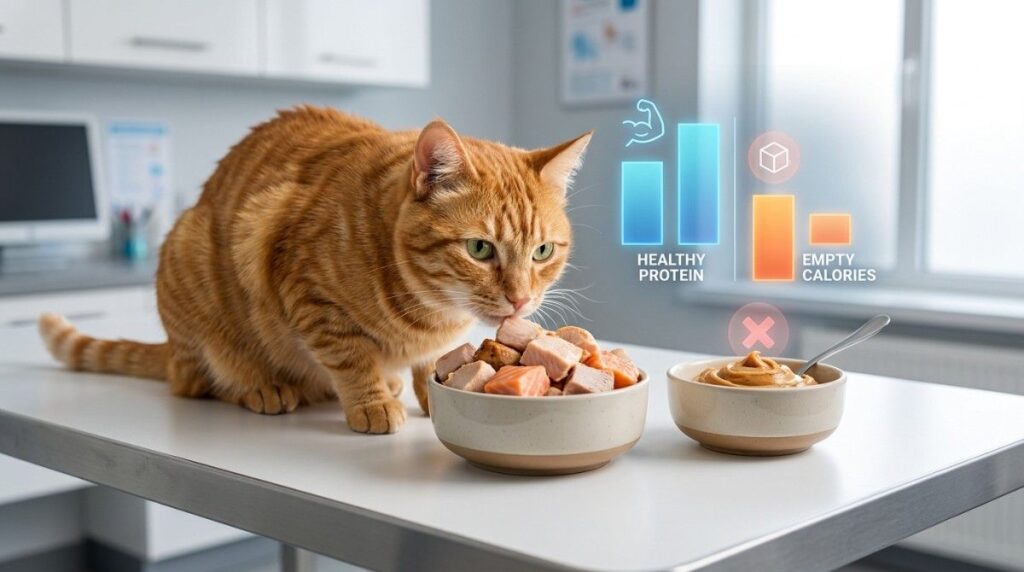
The Real Risks of Peanut Butter for Cats
This is the part most cat owners skip past, but it matters the most. Here are the actual dangers hiding inside a jar of peanut butter.
1. Xylitol Poisoning
Some peanut butters, especially “sugar-free” or “diet” versions, use an ingredient called xylitol as a sweetener. Xylitol is extremely dangerous for pets. In dogs, it is well known to cause a fast and severe drop in blood sugar. Vets believe cats can be harmed by it too, even though it is studied less in felines.
Signs of xylitol poisoning include:
- Vomiting
- Weakness or wobbly walking
- Drooling
- Seizures
- Collapse
If you ever see xylitol, birch sugar, or birch bark extract on a peanut butter label, keep it far away from your cat. This is one of the few situations where peanut butter can turn from “not a great idea” into a real emergency.
2. Choking Hazard
Peanut butter is thick and sticky. That texture can be a problem for a cat’s small mouth and throat. Unlike humans, cats cannot easily move a sticky lump around with their tongue and cheeks. A big glob of peanut butter can stick to the roof of the mouth or throat and cause choking or gagging.
3. Weight Gain and Stomach Upset
Peanut butter is high in fat. Too much fat can lead to:
- Vomiting
- Diarrhea
- Stomach pain
- Long-term weight gain
A chunky cat has a higher risk of joint pain, diabetes, and other health problems. Since peanut butter offers almost no nutritional payoff, the extra calories are simply not worth the risk for most cats.
4. Peanut Allergies
Just like people, some can cats have peanut butter. This is uncommon, but it can happen. Watch for:
- Itchy or red skin
- Swelling around the face
- Vomiting or diarrhea after eating it
- Hives
If you notice any of these signs after your cat eats peanut butter for the first time, stop feeding it and call your vet.
How Much Peanut Butter Can a Cat Safely Have?
If your cat truly loves the taste, or if you use it to hide a pill, keep the amount very small. A good rule of thumb from vets is:
- No more than a tiny lick, about the size of a pea, once in a while
- Never more than 1/8 to 1/4 teaspoon in a single sitting
- Only give it a few times a month, not daily
- Always check the label first for xylitol, added sugar, or salt
Treats of any kind, including peanut butter, should never make up more than 10 percent of your cat’s daily food intake. For most cats, sticking to a small lick rather than a full spoonful is the safest path.
Peanut Butter vs Peanuts: Is There a Difference?
Whole peanuts are actually riskier than can cats have peanut butter in some ways. A whole peanut, especially one still in its shell, can be swallowed whole and cause a blockage in the throat or gut. Peanut butter, while sticky, at least does not carry that same shape-based choking risk in the same way.
That said, plain peanuts without salt or seasoning are generally considered slightly safer than seasoned ones, but neither offers your cat any real nutritional value. It is best to avoid feeding whole peanuts to cats altogether.
What to Do If Your Cat Already Ate Peanut Butter
Don’t panic. Here is a simple step-by-step plan.
- Check the label. Look for xylitol, birch sugar, or birch bark extract.
- If xylitol is present. Treat this as an emergency. Call your vet or an emergency animal hospital right away.
- If there is no xylitol. Simply watch your cat for the next few hours.
- Call your vet. If you notice vomiting, diarrhea, loss of appetite, or unusual behavior.
- Keep the label or packaging. Handy in case your vet needs the ingredient list.
For any pet poisoning concern in the United States, you can also contact the ASPCA Animal Poison Control Center at (888) 426-4435. This helpline is available across the country, whether you live in a big city or a small town, and can guide you through next steps before you reach a vet.
Safer Treats to Give Your Cat Instead
Since can cats have peanut butter offers little benefit, here are some cat-safe treats that are healthier and closer to what a cat’s body actually needs:
- Small pieces of cooked, plain chicken
- A little bit of canned tuna or salmon in water (no seasoning)
- A small piece of boiled egg
- Store-bought treats made specifically for cats
- Cat grass or catnip for cats who enjoy plants
These options give your cat real nutrition instead of empty calories, and they carry far less risk than a spoonful of peanut butter.
When Peanut Butter Might Actually Be Useful
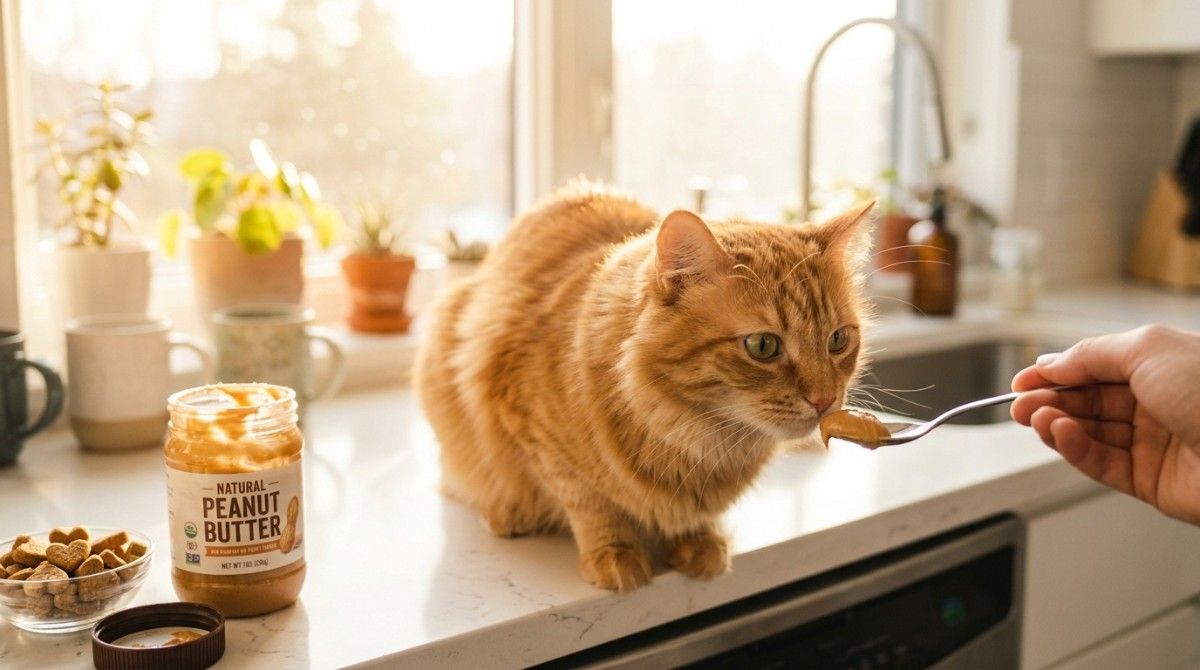
There is one situation where a tiny dab of peanut butter can be handy: hiding a pill. Some cats refuse medicine no matter what you try. A small dab of natural peanut butter, free of xylitol, salt, and sugar, can sometimes mask the taste of a pill. Even here, though, wet cat food or a specially made pill pocket treat is usually a safer and more nutritious option.
The Bottom Line
So, can cats have peanut butter ? Yes, but only in very small, occasional amounts, and only if the label is free of xylitol. It is not toxic on its own, but it also does not belong in your cat’s regular diet. The safest choice is to skip it and offer meat-based treats instead. If your cat sneaks a taste from your toast, don’t panic just check the ingredients and keep an eye on them for the next few hours.
FAQs
Can cats have peanut butter?
Yes, cats can have a small amount of peanut butter as an occasional treat, as long as it does not contain xylitol. It has no real nutritional value for cats and should never replace their regular food
Can cats have peanut butter every day?
No. Peanut butter should not be a daily treat. It is high in fat and offers no nutritional benefit, so daily feeding can lead to weight gain and stomach upset over time.
Is peanut butter toxic to cats?
Most peanut butter is not toxic to cats. The main danger is xylitol, an artificial sweetener sometimes used in sugar-free peanut butter, which can be very harmful to pets.
How much peanut butter can I give my cat?
A tiny amount, no more than 1/8 to 1/4 teaspoon, given only occasionally, is considered a safe upper limit by most vets.
What happens if a can cats have peanut butter with xylitol?
Xylitol can cause vomiting, weakness, seizures, or collapse in pets. If your cat eats peanut butter containing xylitol, contact your vet or an emergency animal hospital immediately.
Can kittens eat peanut butter?
It is best to avoid giving peanut butter to kittens. Their digestive systems are more sensitive, and the fat content can easily upset their stomachs.
What can I give my cat instead of peanut butter?
Small pieces of cooked chicken, tuna, or salmon are healthier options. Cat-specific treats are also a safe and nutritious alternative to peanut butter.
Hi, I’m Sana Sajid!I’m the voice behind CatsCare.blog, sharing my 10+ years of hands-on cat care experience. With a diploma in animal care, I offer practical tips, trusted advice, and easy-to-follow guides to help keep your cats healthy and happy.
When I’m not writing, I spend time with my own cats or exploring the latest developments in feline health. Follow CatsCare.blog for expert insights and real cat stories!