
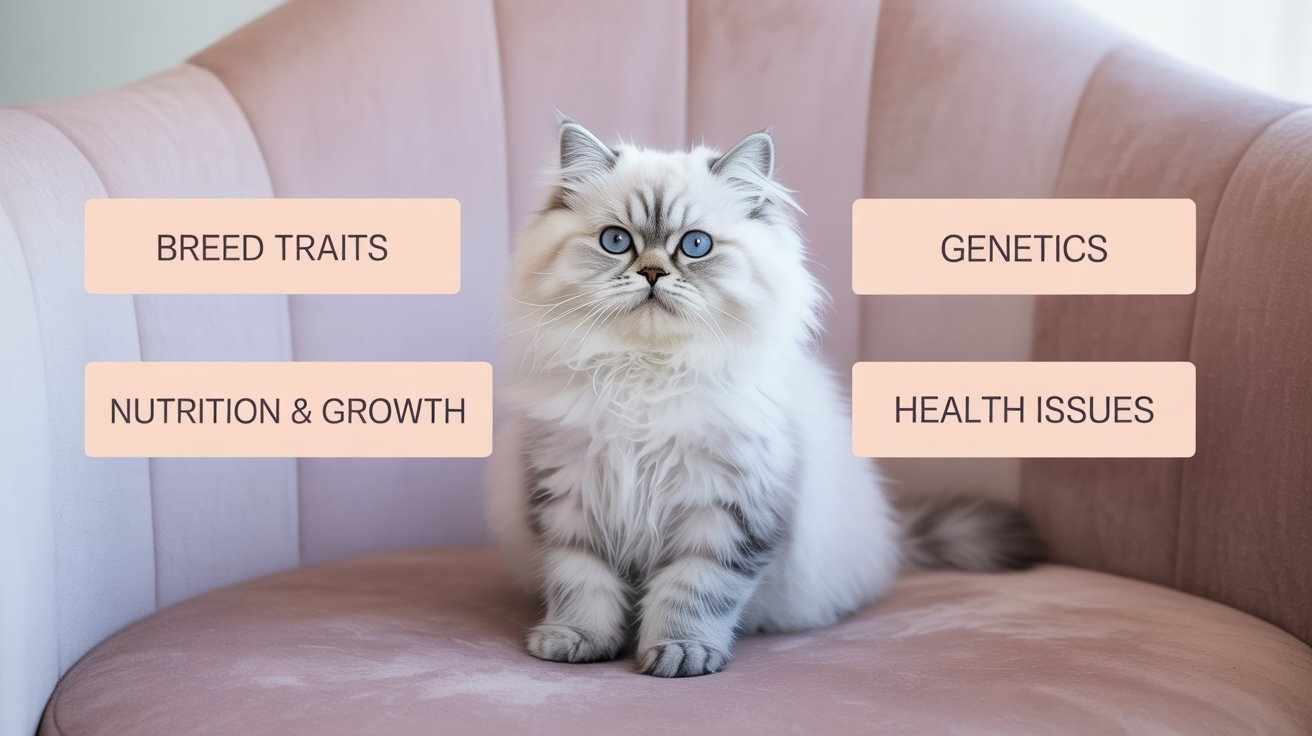
Why Is My Cat’s Head So Small? The top 4 causes are breed genetics, stunted growth, malnutrition, and natural body proportions.
Why is my cat’s head so small?
Many cat owners wonder, “Why does my cat’s head look so small compared to its body?” It can be surprising, but the reason isn’t always a cause for concern.
In many cases, a small head is simply due to breed traits or a normal stage of kitten growth. However, in some situations, it may signal issues like poor nutrition, developmental disorders, or neurological conditions such as cerebellar hypoplasia.
The key is knowing whether it’s harmless or needs veterinary attention. This guide explains the top reasons for a small head in cats, what to look out for, and when to seek professional advice.
Why is my cat’s head so small? Top 4 Reasons
| Reason | What It Means | What You Can Do |
|---|---|---|
| 1. Breed Traits | Some cats naturally have small heads, like Siamese or Cornish Rex. | Nothing to worry about; it’s typical for the breed. |
| 2. Genetics | A poor diet as a kitten can affect head size. | Monitor growth; usually harmless. |
| 3. Nutrition & Growth | Nothing to worry about; it’s normal for the breed. | Feed high-quality food with protein and vitamins. |
| 4. Health Issues | Rare conditions like microcephaly or hormone problems. | Visit a vet if your cat shows other unusual signs. |

Common Causes of a Small Head in Cats
Pet owners often ask, “Why is my cat’s head so small?” The answer can vary, but the most common reasons include:
- Rare causes – Trauma, infection, or developmental skull disorders may make a cat’s head look undersized compared to its body.
- Breed genetics – Some cats are born with proportionally smaller skulls.
- Kitten growth stage – Bodies often grow faster than heads, causing imbalance.
- Congenital issues – Conditions like cerebellar hypoplasia in kittens affect skull and brain development.
- Malnutrition – Poor prenatal or early diet can stunt skull proportions.
When Is a Small Head a Problem?

Sometimes the answer to “why is my cat’s head so small” is harmless, but other times it signals health concerns. Watch for these warning signs:
- Unsteady walking or wobbling (possible cerebellar hypoplasia in kittens)
- Frequent tremors or head tilt
- Seizures or sudden collapse
- Trouble eating or drinking
- Failure to gain weight or delayed growth milestones
- Lethargy, weakness, or poor coordination
If your cat’s small head appears with these symptoms, it’s more than just genetics or growth stages — a vet exam is essential.
Veterinary Diagnosis
If you’re asking, “Why is my cat’s head so small?” a vet can help uncover the cause. Diagnosis may include:
- Physical and neurological exam – Checking reflexes, coordination, and skull shape.
- Growth history – Comparing head size with age and breed standards.
- Blood tests Screening for infections or nutritional issues.
- Imaging (X-ray, CT, MRI) – Assessing skull and brain development.
- Neurology referral – For suspected congenital or brain conditions.
These steps help confirm whether a small head is a normal variation or linked to medical concerns.
Treatment & Management
Treatment depends on why your cat’s head looks small. Common approaches include:
- Standard breed/age – No treatment needed; regular growth monitoring.
- Nutritional issues – Improved diet, supplements, and weight checks.
- Congenital/neurological conditions – Supportive care like safe spaces, physical therapy, and managing tremors or seizures.
- Infections or trauma – Medication or supportive therapy as prescribed by a vet.
- Long-term monitoring – Regular checkups to track skull proportion and overall health.
Even if you wonder, “Why is my cat’s head so small?” many cats live everyday lives with proper care.

When to See a Vet Urgently
If you’re still asking, “Why is my cat’s head so small?“ seek immediate veterinary help if you notice:
- Seizures or sudden collapse
- Severe weakness or lethargy
- Difficulty eating, drinking, or swallowing
- Rapidly worsening coordination or tremors
- Head trauma or injury
- Trouble breathing or extreme distress
These red flags suggest more than just genetics or growth stage. A small head combined with emergency symptoms can mean severe underlying conditions. Prompt veterinary attention ensures the best chance of diagnosing and treating the problem effectively.
Prevention & Care Tips
While not all causes of “why is my cat’s head so small” can be prevented, you can reduce risks with these steps:
- Vaccinate queens – Protect against feline panleukopenia, which may cause cerebellar hypoplasia in kittens.
- Provide proper prenatal nutrition – Balanced diets for pregnant cats and kittens.
- Schedule early vet checkups – Detect growth or skull proportion issues sooner.
- Maintain parasite control – Prevent malnutrition and developmental delays.
- Choose responsible breeding – Avoid hereditary skull or neurological problems.
Good care from pregnancy through kittenhood significantly lowers the chance of abnormal skull growth.

FAQs
Q5: Should I see a vet if my cat’s head looks small?
Yes, especially if there are tremors, seizures, or poor growth.
Q1: Why is my cat’s head so small compared to its body?
Often due to breed traits or growth stage, but sometimes linked to congenital issues or malnutrition.
Q2: Will my cat’s head grow bigger over time?
Yes, many kittens grow into proportion, though congenital conditions may limit growth.
Q3: Is cerebellar hypoplasia the reason why my cat’s head is so small?
It can be. This condition affects brain development and head size.
Q4: Can poor nutrition stunt skull growth?
Yes, lack of proper nutrition can slow skull and body development.
Hi, I’m Sana Sajid!I’m the voice behind CatsCare.blog, sharing my 10+ years of hands-on cat care experience. With a diploma in animal care, I offer practical tips, trusted advice, and easy-to-follow guides to help keep your cats healthy and happy.
When I’m not writing, I spend time with my own cats or exploring the latest developments in feline health. Follow CatsCare.blog for expert insights and real cat stories!
![A fluffy silver tabby cat with long fur is sprawled out and relaxing on a light-colored sofa, looking towards the camera. [Why Are Cats So Lazy?]](https://catscare.blog/wp-content/uploads/2025/09/why-are-cats-so-lazy.jpg)
![A grey tabby cat sitting on a light-colored couch with its mouth open, providing visual context for an article on [Why do Cats Cough].](https://catscare.blog/wp-content/uploads/2026/01/Why-do-Cats-Cough.jpg)

7 thoughts on “Why is my cat’s head so small? Top 4 Reasons”