
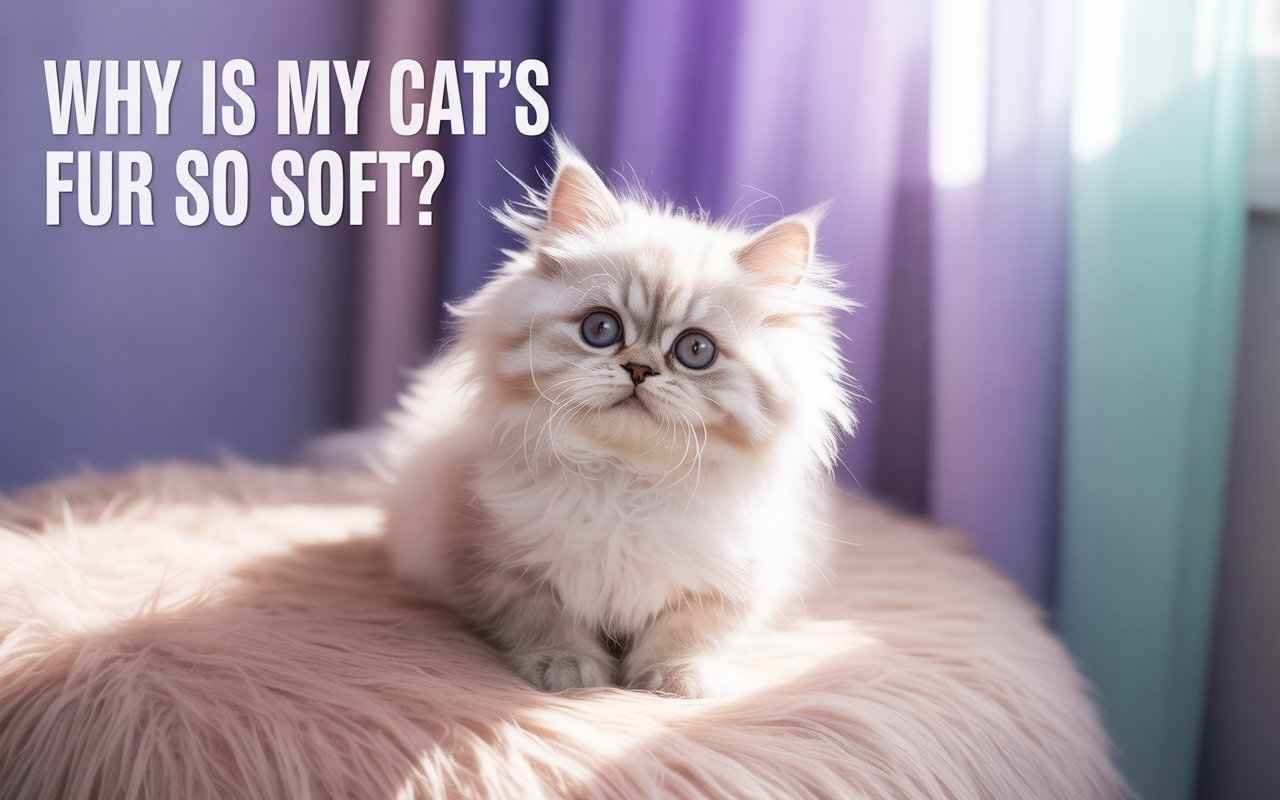
Why Is My Cat’s Fur So Soft? The top 9 Reasons include good diet, hydration, genetics, frequent grooming, young age, health, hormones, and environment.
Why Is My Cat’s Fur So Soft?
If you’ve ever wondered, “Why is my cat’s fur so soft?”, you’re not alone. Many cat owners notice that their feline’s coat feels silky, plush, and almost luxurious.
This softness isn’t just pleasant to touch — it often reveals a lot about your cat’s overall health. Genetics, diet, grooming habits, hydration, and even environmental factors all play a role in coat texture.
Kittens may feel exceptionally soft, while some adult breeds are naturally silky. In this guide, we’ll explore the most common reasons behind soft cat fur and share practical tips to keep your cat’s coat smooth and healthy.
Why Is My Cat’s Fur So Soft? 9 Reasons
| Reason | Why Your Cat’s Fur Is Soft |
|---|---|
| 1. Grooming | Cats lick themselves, spreading oils to keep fur smooth. |
| 2. Natural Oils | Skin makes oils that make fur shiny and soft. |
| 3. Food | Healthy food with protein and fats keeps fur silky. |
| 4. Breed | Some cats are born with very soft fur. |
| 5. Water | Drinking water keeps skin and fur healthy. |
| 6. Age | Kittens have extra soft baby fur. |
| 7. New Fur | Fresh fur after shedding feels soft. |
| 8. Health | A soft coat means your cat is healthy. |
| 9. Indoor Life | Indoor cats stay cleaner and softer. |
Genetics & Breed Traits
A big reason why my cat’s fur is so soft is genetics. Certain breeds like Ragdolls, Persians, and Siberians are famous for plush double coats that naturally feel silky.
Even hypoallergenic breeds such as Russian Blue or Balinese often have fewer coarse guard hairs, giving their fur a smooth texture.
Kittens also tend to feel softer because their early coats are finer than adult fur. While genes set the foundation for softness, grooming and diet still influence how healthy and silky the coat stays.
Diet & Nutrition
Another key reason why my cat’s fur is so soft is nutrition. A balanced diet supports skin health, natural oils, and coat texture. Important elements include:
- High-quality protein – essential for hair growth and strong follicles.
- Omega-3 and Omega-6 fatty acids – keep fur glossy and silky.
- Vitamins & minerals, especially vitamin E and zinc, are essential for skin health.
- Hydration – fresh water prevents brittle or dry fur.
Feeding your cat protein-rich food with these nutrients ensures a soft, shiny coat.

Grooming, Natural Oils & Sebum
Soft fur also comes from proper grooming and the body’s natural oils. If you’re asking why my cat’s fur is so soft, consider these factors:
- Self-grooming spreads sebum, a natural oil that keeps fur silky.
- Regular brushing distributes oils evenly and removes dead hair.
- Bathing wisely is important — over-bathing strips oils and leaves fur dry.
- Coat length care — long-haired breeds often need daily brushing.
Together, grooming habits and natural oils explain much of your cat’s soft, smooth coat.
Age & Seasonal Changes

Age and seasons can also explain why my cat’s fur is so soft. Different life stages and coat cycles affect texture:
- Kittens have finer, extra-soft baby fur.
- Adult cats develop thicker, sometimes less silky coats.
- Seniors may lose softness due to reduced oil production.
- Seasonal shedding – winter undercoats feel plush, summer coats are lighter.
- Hormonal changes can also influence coat softness.
These natural shifts explain why your cat’s fur feels softer at certain times of life or year.
Skin Health & Medical Causes
Sometimes, why is my cat’s fur so soft? It relates to overall skin health. Softness usually signals wellness, but changes may reveal issues:
- Allergies can cause fur to become dry, brittle, or greasy.
- Parasites, such as fleas or mites, may damage coat texture.
- Hormonal imbalances, such as thyroid or adrenal problems, can affect the skin and fur.
- Infections, whether fungal or bacterial, dull the coat.
- Vet checkups – detect issues early before fur quality declines.
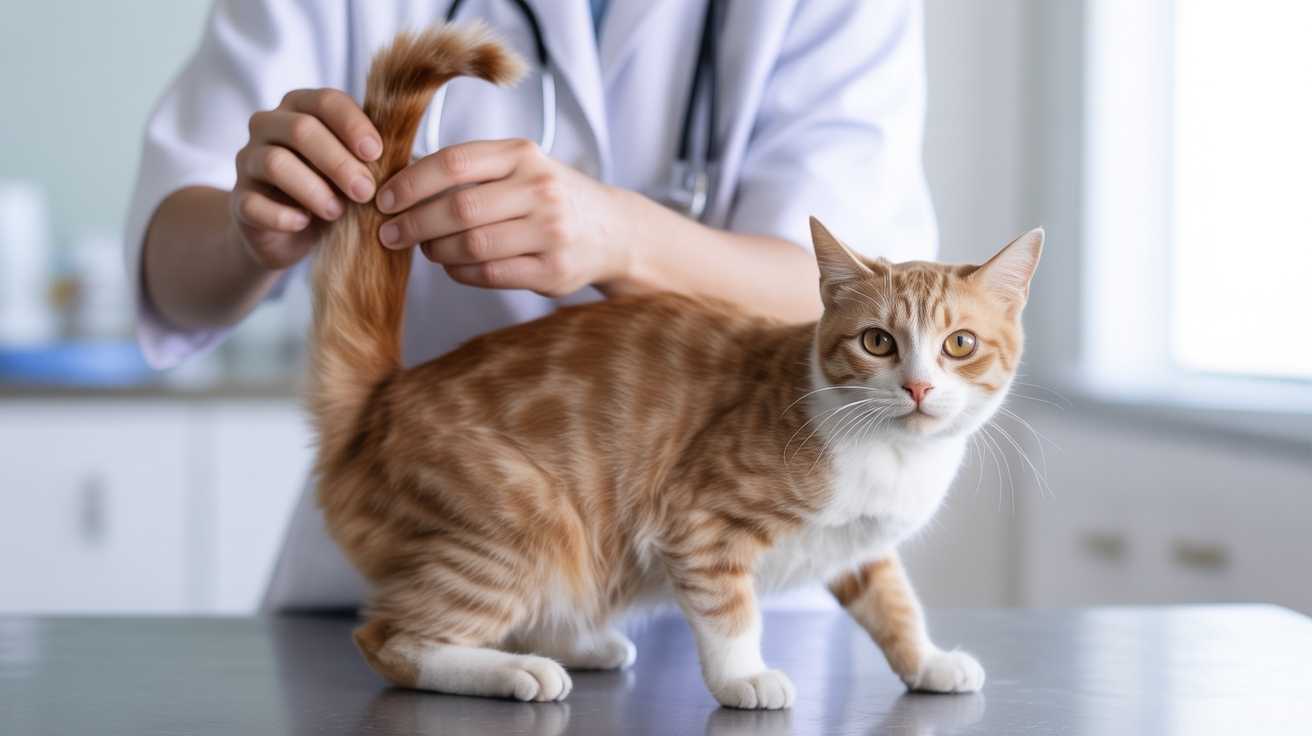
A healthy coat is typically soft, while sudden changes may need veterinary attention.
Environment, Stress & Hydration
Your cat’s surroundings also explain why my cat’s fur is so soft. Key factors include:
- Hydration – fresh water keeps skin supple and fur flexible.
- Indoor environment – humidity helps prevent dry or brittle fur.
- Stress levels – relaxed cats groom more, leading to softer coats.
- Clean spaces – dust-free homes reduce dirt buildup on fur.
- Comfortable climate – stable temperatures support healthy skin oils.
Together, environment, hydration, and stress control play a big role in coat softness.
Practical Tips to Keep Fur Soft
If you’re still asking why my cat’s fur is so soft, here’s how to maintain that silky coat:
- Feed your pet protein-rich food that contains omega-3 and omega-6 fatty acids.
- Brush regularly to spread natural oils.
- Avoid over-bathing — use cat-safe shampoo only when needed.
- Provide fresh water daily for hydration.
- Control parasites with vet-approved flea treatments.
- Reduce stress with play and enrichment.
- Ask your vet before adding supplements.
Simple daily care helps keep your cat’s fur soft and healthy.

When to See the Vet
Sometimes changes in softness signal health issues. If you’re asking why my cat’s fur is so soft but notice sudden texture shifts, watch for:
- A dull or greasy coat that appears suddenly
- Bald patches or uneven shedding
- Excessive itching or scratching
- Flaky or irritated skin
- Behavior changes, such as less grooming
If any of these signs appear, schedule a vet visit. Early care ensures your cat’s coat stays silky and reflects overall health.
FAQs
1. Can stress affect my cat’s fur?
Yes. Stress can reduce grooming and natural oil spread, making fur appear less soft.
2. Why do cats have such soft fur?
Genetics, good nutrition, and grooming habits all play a role. Natural oils keep the coat sleek, while certain breeds are naturally silkier.
3. Is soft fur always a sign of health?
Usually yes, but if softness shifts to greasy, brittle, or patchy fur, it may signal allergies, parasites, or illness.
4. Can diet make my cat’s fur softer?
Absolutely. Protein, omega-3s, and hydration are key to keeping fur shiny and soft.
5. Do kittens have softer fur than adults?
Yes. Kitten coats are extra fine and silky, but their texture changes as they mature.
Hi, I’m Sana Sajid!I’m the voice behind CatsCare.blog, sharing my 10+ years of hands-on cat care experience. With a diploma in animal care, I offer practical tips, trusted advice, and easy-to-follow guides to help keep your cats healthy and happy.
When I’m not writing, I spend time with my own cats or exploring the latest developments in feline health. Follow CatsCare.blog for expert insights and real cat stories!
![A tabby cat with its mouth wide open, exposing its teeth and tongue, used to illustrate dental problems and answer the question [Why are my Cat’s Teeth Falling out?].](https://catscare.blog/wp-content/uploads/2025/12/Cats-Teeth-Falling-out.jpg)
Hi there everyone, it’s my first go to see at this web page, and piece of writing is in fact fruitful for me,
keep up posting such content.
say789 is pretty slick. The design is pretty on point, and it’s user-friendly. Definitely a solid choice! Have a look for yourself: say789