
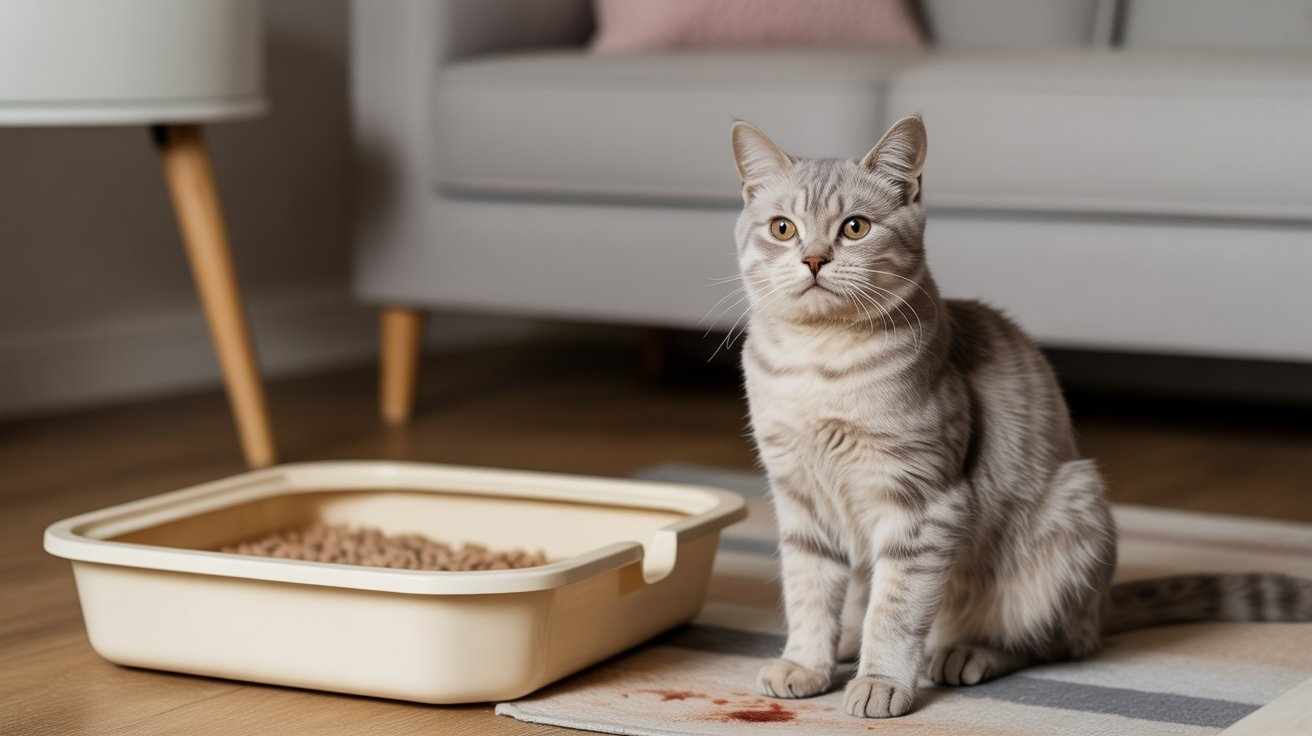
Why Did My Cat Pee Blood: 1. UTI 2. Bladder stones 3. Stress 4. Injury 5. Tumors 6. Kidney disease—urgent vet care is needed.
Why Did My Cat Pee Blood
Finding blood in your cat’s urine is always worrying. It’s a clear sign that something’s not right and your cat needs attention. Sometimes it’s caused by stress or diet, but often it points to a medical problem that shouldn’t be ignored.
Below are the 6 main reasons why your cat may be peeing blood — and what you can do to help.
Quick Overview: Common Reasons Cats Pee Blood
| Cause | Main Symptoms | What You Should Do |
|---|---|---|
| Urinary Tract Infection (UTI) | Frequent peeing, crying, pink urine | Visit vet — antibiotics often needed |
| Bladder Stones | Straining, tiny urine spots | X-ray or ultrasound; surgery may be needed |
| Feline Idiopathic Cystitis (FIC) | Blood without infection, stress signs | Reduce stress; vet medication |
| Kidney Disease | Tiredness, less appetite, dehydration | Blood/urine tests; long-term care |
| Trauma or Injury | Sudden after accident or fall | Urgent vet visit |
| Tumors or Growths | Continuous blood, weight loss | Diagnostic imaging; surgery possible |
1. Urinary Tract Infection (UTI)
A UTI is one of the most common causes of blood in cat urine. It happens when bacteria enter the urinary tract, causing pain and inflammation.
You may notice your cat crying when urinating or straining with pinkish urine.
Treatment usually includes antibiotics and increased water intake.
2. Bladder Stones
When minerals build up in the bladder, they can form hard stones that irritate the bladder lining. This leads to bleeding and discomfort.
If untreated, stones can block urine flow, which is life-threatening.
Your vet will confirm using an X-ray or ultrasound and may suggest a special diet or surgery.
3. Feline Idiopathic Cystitis (FIC)
FIC is a stress-related bladder condition often seen in indoor cats.
Even without infection, cats may have bloody urine, frequent peeing, or excessive licking.
Reduce stress, keep routines steady, and encourage hydration.
Your vet might prescribe anti-inflammatory medication to ease pain.
4. Kidney Disease
Older cats are prone to kidney issues that can cause blood in urine due to reduced filtering ability.
Signs include lethargy, loss of appetite, and excessive drinking or urination.
A vet will do blood and urine tests to confirm the condition.
Early diagnosis and special kidney diets help slow down damage.
5. Trauma or Injury
If your cat recently fell, fought, or was hit, trauma could cause internal bleeding affecting the urinary tract.
Symptoms appear suddenly and always need urgent vet care.
Never try home treatments — your cat must be examined immediately.

6. Tumors or Growths
In rare cases, urinary tract tumors can cause persistent bleeding and weight loss.
You might see blood even without other symptoms.
Vets may use ultrasound, biopsy, or surgery for diagnosis and treatment.
How to Help Your Cat
- Contact your veterinarian immediately if you see blood in urine.
- Keep fresh, clean water available at all times.
- Feed a vet-approved urinary diet.
- Reduce stress and sudden changes in the home.
- Clean the litter box daily and place it in a quiet area.
FAQs
Q1: Is blood in cat urine an emergency?
Yes. It may mean a blocked urinary tract or infection — get immediate vet care.
Q2: Can stress cause this?
Yes. Feline Idiopathic Cystitis (FIC) is often triggered by stress or routine changes.
Q3: Can I treat it at home?
No. Only a veterinarian can diagnose and prescribe the right treatment safely.
Q4: What should I do while waiting for the vet?
Keep your cat hydrated, indoors, and monitor its urination closely.

Hi, I’m Sana Sajid!I’m the voice behind CatsCare.blog, sharing my 10+ years of hands-on cat care experience. With a diploma in animal care, I offer practical tips, trusted advice, and easy-to-follow guides to help keep your cats healthy and happy.
When I’m not writing, I spend time with my own cats or exploring the latest developments in feline health. Follow CatsCare.blog for expert insights and real cat stories!
![A tabby cat sits on a patterned rug next to a litter box, looking at a small pile of spilled litter and a wet spot on the wooden floor. [Why cats pee on rugs]](https://catscare.blog/wp-content/uploads/2025/11/Why-cats-pee-on-rugs-.jpg)

One thought on “6 Alarming Reasons Why Did My Cat Pee Blood”