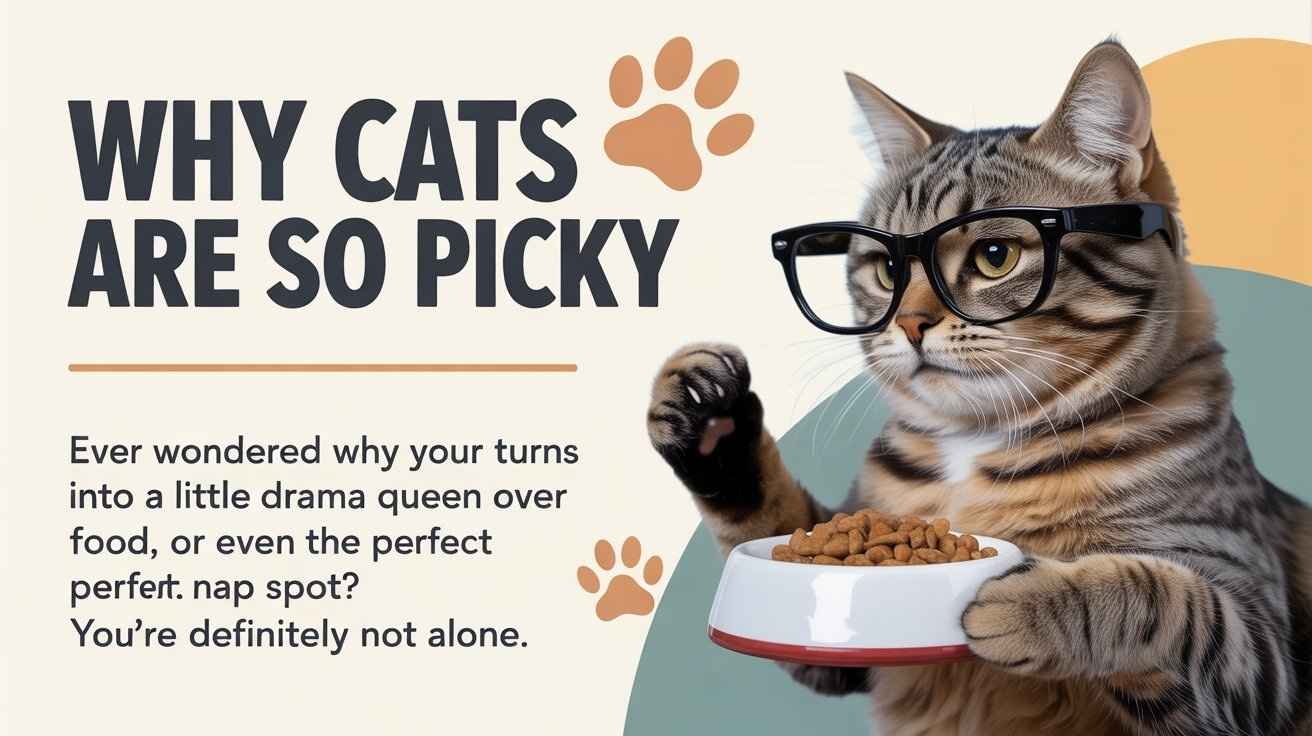
Why cats are so picky: 1. Sensitive taste 2. Texture issues 3. Freshness matters 4. Stress or mood 5. Spoiled by choices.
Why Cats Are So Picky
Ever wondered why your cat turns into a little drama queen over food, toys, or even the perfect nap spot?
You’re definitely not alone.
Cats may look calm and composed, but when it comes to their preferences, they can be incredibly fussy and unpredictable.
Their pickiness often confuses owners — but it’s actually a blend of instincts, mood, and learned behavior.
Let’s explore the five funniest (and real) reasons behind your cat’s famously picky ways.
Why Cats Are So Picky
| Reason | Funny Observation | What It Actually Means |
|---|---|---|
| Smell Sensitivity | Turns nose up like a food critic | Cats smell 14× better than humans |
| Texture Drama | Rejects food for being “too soft” | Texture affects their appetite |
| Mood Swings | Eats today, ignores tomorrow | Cats follow mood, not schedule |
| Territory Trouble | Hates bowl moved an inch | Routine keeps them calm |
| Superior Taste | Acts royal about food | They know exactly what they like — and don’t |
1. Their Nose Is a Food Critic
Cats have an incredibly powerful sense of smell — about 14 times stronger than ours.
That means even a tiny odor change in their food can make them walk away as if it’s “beneath” them.
If dinner smells even slightly off, they’ll skip it without hesitation.
It’s not them being dramatic — it’s instinct.
In the wild, an odd smell could mean spoiled food or danger, so your cat’s just playing it safe.
2. Texture Can Be a Deal Breaker
Cats are texture snobs.
They can love a food one day and refuse it the next — not because of taste, but because of texture.
Wet food might suddenly seem “too mushy,” or kibble might feel “too hard.”
To your cat, it’s like preferring crispy fries over soggy ones — the flavor’s fine, but the texture ruins the experience.
If your cat gets picky, try switching between wet, dry, or mixed textures to see what wins.
3. Their Mood Controls Their Appetite
Cats are mood-based eaters.
One day they’ll eat everything in sight; the next, they’ll ignore their bowl like it doesn’t exist.
Stress, boredom, or even small household changes — like moving furniture — can affect their appetite.
They eat when they feel comfortable, not when you think it’s mealtime.
So if your cat’s skipping dinner, it might just need some quiet time or extra cuddles, not a new brand of food.

4. They Love Routine More Than You Think
Move their food bowl a few inches, and suddenly you’ve “ruined dinner.”
Cats thrive on routine and familiarity, and even tiny changes can make them suspicious.
Their sense of security depends on things being exactly where they expect them to be.
So if you’ve just changed feeding locations, bowls, or schedules, that might explain the sudden protest.
To your cat, routine equals safety, and safety equals appetite.
5. They Truly Believe They Deserve the Best
Let’s be honest — cats act like royalty because, in their minds, they are.
If the food doesn’t meet their “royal standards,” they’ll simply turn away and wait for something better.
This pickiness isn’t just attitude — it’s a sign of confidence and intelligence.
They know what they like, and they’re not afraid to show it (even if it means starving dramatically next to a full bowl).
So yes, when your cat rejects dinner, it’s not a problem — it’s a statement.
FAQs
Q1: Why is my cat suddenly being picky with food?
Your cat might dislike a change in smell, texture, or temperature. Try warming the food slightly or switching to a different texture.
Q2: Can health problems make cats picky?
Yes. Issues like dental pain, digestive discomfort, or stress can all reduce appetite. If it lasts more than 24 hours, visit a vet.
Q3: Are cats naturally picky eaters?
Yes — wild cats learned to be selective to avoid spoiled or unsafe food. Domestic cats still keep that instinct.
Q4: How can I make my cat eat more consistently?
Stick to a routine, serve fresh food at room temperature, and keep their feeding area clean and familiar.
Q5: Is my cat just spoiled?
Not exactly — your cat’s “spoiled” behavior is often just instinct mixed with personality. But yes, they also enjoy the attention!
Hi, I’m Sana Sajid!I’m the voice behind CatsCare.blog, sharing my 10+ years of hands-on cat care experience. With a diploma in animal care, I offer practical tips, trusted advice, and easy-to-follow guides to help keep your cats healthy and happy.
When I’m not writing, I spend time with my own cats or exploring the latest developments in feline health. Follow CatsCare.blog for expert insights and real cat stories!
![A sleek black cat with bright gold eyes sits on a cobblestone floor in a medieval-looking archway, with shafts of light filtering in. [Why are black cats Dreaded]](https://catscare.blog/wp-content/uploads/2025/12/Why-are-black-cats-Dreaded.jpg)
![A tabby cat is captured mid-air, running across a living room rug at night, suggesting high energy, with the text "WHY DO CATS GET ZOOMIES AT NIGHT? 7 SURPRISING REASONS" superimposed. [Why do Cats Get Zoomies at Night]](https://catscare.blog/wp-content/uploads/2025/11/Why-do-Cats-Get-Zoomies-at-Night.jpg)