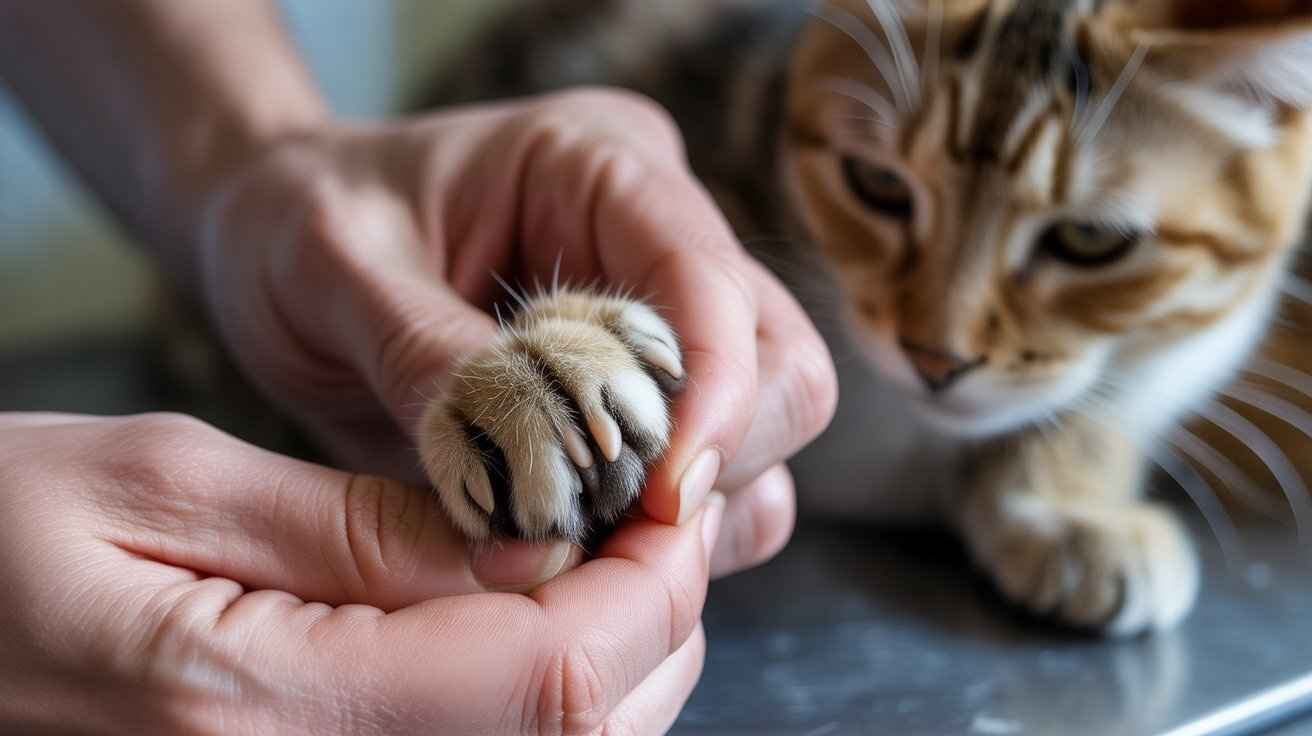
Why are my cat’s nails Brittle: 1. Nutrient deficiency 2. Aging 3. Overgrown nails 4. Dehydration 5. Fungal infection 6. Underlying health issues.
Why are my cat’s nails Brittle?
Cats are known for sharp, healthy claws that help them climb, hunt, and defend themselves. So when your cat’s nails suddenly become brittle, cracked, or fragile, it is a clear sign something isn’t right.
Brittle nails aren’t just a grooming issue—sometimes they indicate deeper health problems, nutritional deficiencies, or infections that need attention.
Below is a detailed breakdown of the most common causes of brittle cat nails, symptoms you should watch for, and when it’s time to see a vet.
Quick Overview of Main Causes
| Cause | What It Means | Warning Signs |
|---|---|---|
| Nutritional Deficiency | Lack of essential vitamins like biotin and protein | Dull coat, low energy |
| Trauma or Injury | Nail damage due to snagging or rough scratching | Limping, bleeding |
| Fungal Infection | Nail discolouration and brittle texture | Yellow nails, swelling |
| Allergies | Inflammation around nail beds | Constant licking |
| Ageing | Natural thinning of nails in senior cats | Slow nail growth |
| Poor Nail Care | Nails growing too long and breaking | Overgrown claws |
1. Nutritional Deficiencies
A poor diet is one of the most common reasons behind brittle claws. Cats need a diet rich in animal protein, omega-3 fatty acids, vitamins, and minerals to maintain healthy nails.
What deficiency causes brittle nails?
Low levels of biotin, zinc, and amino acids weaken the keratin structure of the nail, causing peeling or breaking.
Signs of nutrient deficiency:
- Dull, rough coat
- Low appetite
- Dry skin
- Slow nail growth
If your cat’s food is low-quality or plant-based, switching to a high-protein, vet-approved diet is essential.
2. Trauma or Nail Injury
Sometimes the reason is simple: your cat injured its nail. Many cats get their claws caught in carpets, blankets, furniture, or scratching posts.
When the nail bends or tears, it becomes weaker and more likely to split.
Signs of nail trauma:
- Sensitivity when touching the paw
- Limping
- Blood around the nail
- Nails grow in an odd shape afterwards
If you notice swelling or bleeding, a vet visit is recommended.
3. Fungal or Bacterial Infection
Infections around the nail bed can significantly weaken the nail’s structure. Fungal infections like ringworm or yeast infections can discolor the nails and make them brittle.
Symptoms of fungal infection:
- Yellow, brown, or flaky nails
- Swollen nail bed
- Mild oozing or discharge
- Excessive licking
These infections don’t go away on their own and require antifungal treatment.
4. Allergies and Skin Issues
Cats with environmental or food allergies may develop inflammation around their nails (paronychia). This inflammation weakens the nail root, making the claws thin and breakable.
Common allergy triggers:
- Dust mites
- Pollen
- Household cleaning chemicals
- Certain cat foods
Your cat may constantly lick or chew at their paws, worsening nail damage.
5. Ageing
As cats age, their keratin production naturally slows down. Senior cats often have nails that grow slower but break more easily.
Signs ageing is the cause:
- Your cat is over 10 years
- Nails grow thicker or curve more than usual
- Difficulty retracting claws
Older cats also groom less, leading to neglected nail care.
6. Poor Nail Care or Lack of Scratching Options
If your cat’s nails grow too long, they become more prone to splitting. Cats naturally maintain their claws by scratching, but if they don’t have enough scratching surfaces, the nails stay long and unhealthy.
Causes of poor nail maintenance:
- No access to scratching posts
- Owner not trimming nails regularly
- Indoor cats with less natural nail wear
Long nails can curl and dig into the paw pads, causing further damage.
How to Strengthen Your Cat’s Nails
Brittle nails are often treatable with lifestyle changes.
Improve Diet Quality
Choose a vet-recommended high-protein diet containing:
- Omega-3 fatty acids
- Biotin
- Zinc
- Taurine
Add Nail-Strengthening Supplements
Biotin supplements are commonly prescribed to boost keratin production.
Provide Proper Grooming
Regular nail trimming every 2–4 weeks helps prevent accidental tearing.
Offer Multiple Scratching Posts
Materials like sisal, cardboard, and wood help naturally strengthen claws.
Treat Underlying Conditions
If caused by infections or allergies, your vet will prescribe medication accordingly.
When to See a Vet
Visit the vet if you notice:
- Bleeding or pus
- Nail breaking repeatedly
- Discoloration (yellow or brown)
- Persistent swelling
- Sudden change in nail structure
Sudden brittle nails can also signal underlying thyroid, autoimmune, or hormonal issues.
FAQs
1. Are brittle nails in cats serious?
Yes, because they often indicate nutritional deficiencies, infections, or underlying medical problems.
2. Can dry weather cause brittle cat nails?
Yes. Low humidity can dry out the nail bed, especially in indoor heated environments.
3. Does over-trimming cause brittle nails?
Not brittle nails, but improper cutting can cause cracks or splits.
4. Can worms or parasites cause brittle nails?
Indirectly, yes. Parasites can cause malnutrition, which affects nail strength.
5. Do cats need supplements for healthy nails?
Not always. A balanced, high-quality diet is usually enough unless your vet recommends biotin or omega-3 supplements.

Hi, I’m Sana Sajid!I’m the voice behind CatsCare.blog, sharing my 10+ years of hands-on cat care experience. With a diploma in animal care, I offer practical tips, trusted advice, and easy-to-follow guides to help keep your cats healthy and happy.
When I’m not writing, I spend time with my own cats or exploring the latest developments in feline health. Follow CatsCare.blog for expert insights and real cat stories!
![A man's face in profile being gently pawed by an orange tabby cat whose claws are slightly extended near his nose. [Why did my cat bite my Nose]](https://catscare.blog/wp-content/uploads/2025/11/Why-did-my-cat-bite-my-Nose.jpg)
![A close-up illustration of a cat's eye in profile with diagrams showing the anatomy and light reflection, specifically highlighting the large pupil and the eye's reflective layer. [Why cats can see in the dark]](https://catscare.blog/wp-content/uploads/2025/11/Why-cats-can-see-in-the-dark.jpg)
![A tabby cat is captured mid-air, running across a living room rug at night, suggesting high energy, with the text "WHY DO CATS GET ZOOMIES AT NIGHT? 7 SURPRISING REASONS" superimposed. [Why do Cats Get Zoomies at Night]](https://catscare.blog/wp-content/uploads/2025/11/Why-do-Cats-Get-Zoomies-at-Night.jpg)