
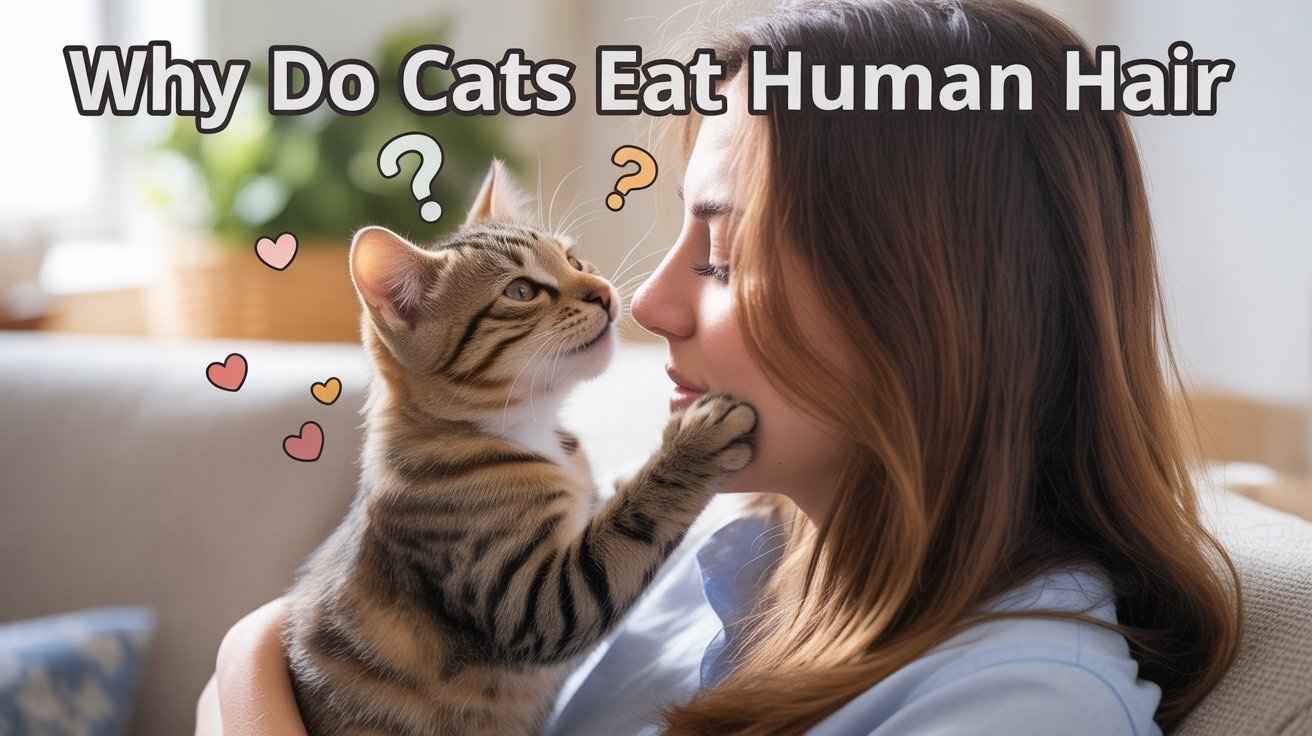
Why Do Cats Eat Human Hair: 1. Showing affection, 2. Grooming behaviour, 3. Stress relief, 4. Boredom, 5. Curiosity, 6. Pica disorder, 7. Seeking attention.
Why Do Cats Eat Human Hair
If your cat likes to lick, chew, or even nibble your hair, it might seem strange — but it’s actually quite common. Understanding why cats eat human hair can help you know whether it’s a sign of love, curiosity, or stress.
This behaviour often has harmless reasons, but sometimes it may indicate deeper emotional or physical needs.
Why Cats Eat Human Hair
| Reason Type | Example Behavior | What It Means |
|---|---|---|
| Affectionate Grooming | Licking or chewing your hair | Shows bonding and love |
| Curiosity | Sniffing or tasting your hair | Attracted to your scent or texture |
| Stress or Anxiety | Repetitive licking | Self-soothing action |
| Nutritional Deficiency (Pica) | Eating hair or fabric | Possible health concern |
| Attention Seeking | Doing it while you react | Wants your focus or response |
1. Showing Affection and Bonding
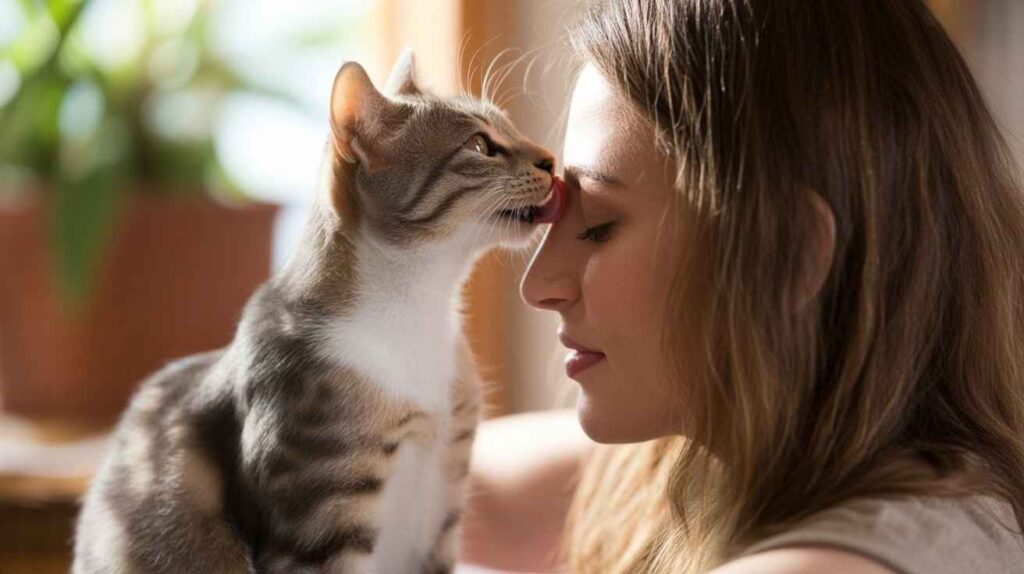
Cats often lick or chew your hair as a form of social grooming, known as allogrooming. In the feline world, this is how cats show love and belonging.
So, when your cat grooms your hair, it means they consider you part of their group — a genuine sign of affection.
Tip: Allow it occasionally if gentle, but distract your cat if it becomes excessive.
Tip: Allow it occasionally if gentle, but distract your cat if it becomes excessive.
2. Your Hair Smells Interesting
Cats have an excellent sense of smell — much stronger than humans.
If your shampoo, conditioner, or oil has a strong scent, your cat might find it fascinating and want to explore it. Some products even contain animal-based ingredients that appeal to cats.
Solution: Use unscented or mild products if your cat seems obsessed with your hair.
Solution: Use unscented or mild products if your cat seems obsessed with your hair.
3. Stress or Anxiety Relief
Some cats lick or eat hair as a comforting habit.
When stressed, grooming helps them release natural endorphins, which reduce anxiety. Loud noises, loneliness, or environmental changes may trigger this response.
Tip: Give your cat a quiet space, regular playtime, and cat-safe chew toys to ease tension.
Tip: Give your cat a quiet space, regular playtime, and cat-safe chew toys to ease tension.
4. Attention-Seeking Behaviour
Cats are clever. They quickly learn that chewing or pulling their hair gets an immediate reaction.
Even if you say “no,” you’ve already given them what they wanted — your attention.
What to Do:
Ignore the behavior completely. Reward calm moments instead so your cat learns which actions bring your attention positively.
What to Do:
Ignore the behavior completely. Reward calm moments instead so your cat learns which actions bring your attention positively.
5. Texture Curiosity
Your cat might simply love the texture of your hair. Long, soft, or wavy strands feel different, and cats explore by touching and tasting.
It’s not harmful unless they start swallowing hair.
Fix: Offer safe textured toys like feather teasers or chew ropes to satisfy curiosity.
Fix: Offer safe textured toys like feather teasers or chew ropes to satisfy curiosity.
6. Nutritional Deficiency (Pica)
When cats eat hair or other non-food items, it could indicate pica — a condition often linked to nutrient deficiency or boredom.
It’s important to get this checked because swallowing hair can cause digestive issues.
Action Step:
Visit a vet to rule out deficiencies and discuss balanced nutrition or supplements.
Action Step:
Visit a vet to rule out deficiencies and discuss balanced nutrition or supplements.
7. Grooming Instinct
Cats instinctively groom their family members. When your cat grooms your hair, they’re treating you like one of their own — keeping you “clean” and close.
It’s a sign of trust and emotional closeness, not aggression or dominance.
Did You Know?
Mother cats groom kittens to teach them cleanliness and strengthen social bonds.
Did You Know?
Mother cats groom kittens to teach them cleanliness and strengthen social bonds.
FAQs
Q1: Is it harmful if my cat eats my hair?
A little isn’t dangerous, but too much can cause hairballs or intestinal blockage.
Q2: Why does my cat only eat my hair and not others’?
Your hair scent or texture may be more familiar or comforting to your cat.
Q3: How can I stop my cat from chewing my hair?
Redirect their attention using toys, avoid reacting emotionally, and keep hair tied back.
Q4: What if my cat swallows a hair strand?
Monitor for vomiting or constipation — if symptoms appear, contact your vet.
Q5: Can this be a sign of love?
Yes, in many cases, it’s just your cat’s unique way of showing affection.
Hi, I’m Sana Sajid!I’m the voice behind CatsCare.blog, sharing my 10+ years of hands-on cat care experience. With a diploma in animal care, I offer practical tips, trusted advice, and easy-to-follow guides to help keep your cats healthy and happy.
When I’m not writing, I spend time with my own cats or exploring the latest developments in feline health. Follow CatsCare.blog for expert insights and real cat stories!
![A woman sits on the floor of a sunny living room, smiling and petting an orange cat on her lap while two other cats, one gray and white and one gray, sit nearby. [Why are cats attracted to you]](https://catscare.blog/wp-content/uploads/2025/11/Why-are-cats-attracted-to-you.jpg)
![An illustration titled "WHY DO CATS IGNORE YOU." It features three cats—a tabby, an orange cat, and a black cat—with thought bubbles pointing to their behavior, labeled "INDEPENDENCE MODE," "FELINE MODE," and "FELINE COMMUNICATION." The graphic explains the reasons [Why Do Cats Ignore You] with a human hand reaching out on the right.](https://catscare.blog/wp-content/uploads/2025/11/Why-Do-Cats-Ignore-You.jpg)
3 thoughts on “7 Weird Reasons Why Do Cats Eat Human Hair”