
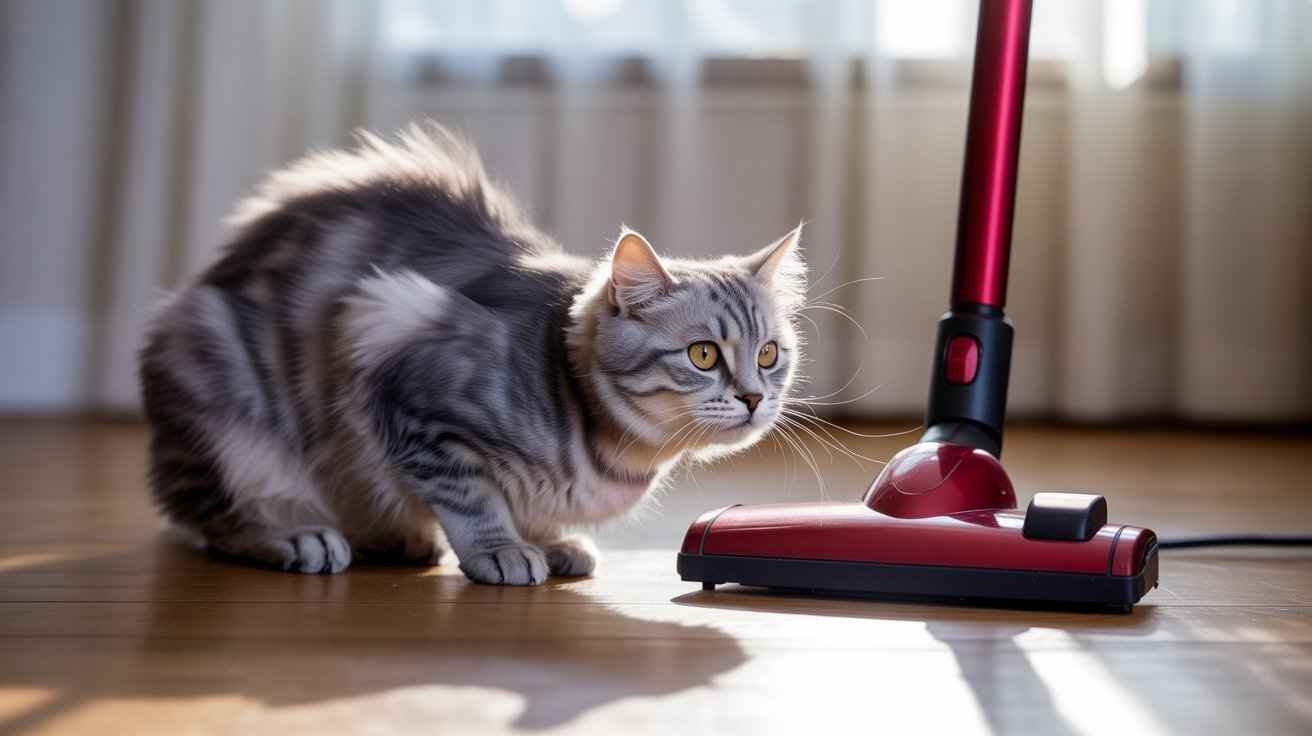
Why are cats scared of vacuums? 5 shocking reasons: 1. Loud noise 2. Strange smell 3. Vibrations 4. Territory threat 5. Stress.
Why are cats scared of vacuums?
Cats may seem brave when they climb high shelves or chase toys, but the sound of a vacuum cleaner can turn even the boldest feline into a frightened ball of fur.
This fear isn’t just a funny reaction—it’s deeply rooted in their instincts, sharp senses, and need for control over their environment.
Understanding why cats fear vacuums can help make cleaning time less stressful for both you and your pet.
Quick Overview: Why Cats Fear Vacuums
| Factor | How It Triggers Fear in Cats |
|---|---|
| Noise | Extremely loud and overwhelming compared to daily sounds |
| Smell | Strong odors from dust and filters irritate their noses |
| Movement | Large, unpredictable, and predator-like motions cause alarm |
| Vibrations | Tremors through the floor stress sensitive paw pads |
| Territory Change | Removes familiar scents and rearranges known spaces |
1. Extreme Sensitivity to Noise
- Cats have an incredible hearing range—up to 64 kHz, which is nearly twice what humans can detect. A typical vacuum cleaner runs between 70 and 80 decibels, comparable to the noise of heavy traffic or construction for a cat’s ears.
Unlike softer sounds in the home, the vacuum’s continuous roar offers no break, overwhelming their brain and triggering an instinctive flight response.
To them, the noise feels like a constant, unavoidable threat. This is why most cats immediately run for cover when the machine is turned on.
Tip: Try vacuuming when your cat is in another room, or use a quieter model to reduce stress.
2. The Strange Shape and Motion
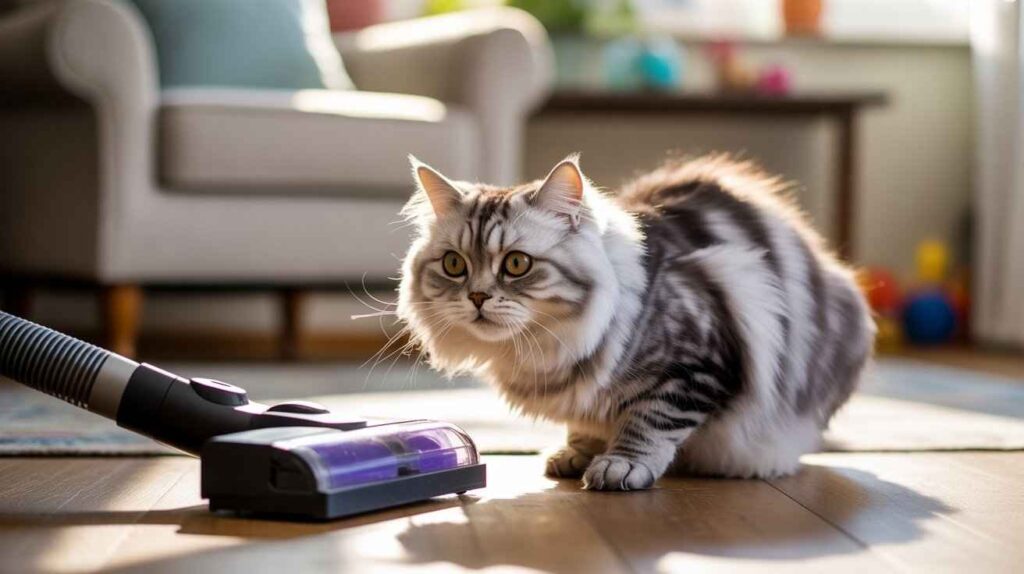
To humans, a vacuum is a simple household tool. But to cats, it appears large, unpredictable, and alive. The moving body, snake-like hose, and swinging motions mimic the movements of predators found in nature.
Cats rely heavily on body language to understand whether something is safe or dangerous. Since a vacuum moves without predictable patterns or familiar cues, it’s confusing and threatening to them.
Tip: Let your cat sniff and inspect the vacuum while it’s turned off. This helps them associate it with safety rather than danger.
3. Strong Odours and Vibrations
Cats have a sense of smell far stronger than humans—over 200 million scent receptors compared to our 5 million. When a vacuum runs, it releases a mix of odours from dust, the motor, and the filter. These unfamiliar smells can be intense and unpleasant to a cat.
Additionally, vacuums emit small vibrations through the floor, which cats can feel through their paws. These tremors make it seem as though the ground itself is shaking.
Together, the smell and vibration overstimulate their senses, leading to discomfort and fear.
Tip: Clean the vacuum filter regularly and consider models designed to minimise odour and vibration.

4. Disruption of Territory
Cats are highly territorial animals. They mark their space using scent glands in their paws, cheeks, and fur. When you vacuum, you unintentionally remove these scent markings by sucking up fur, dust, and other materials.
To a cat, this feels like their territory has been invaded and altered. The room no longer smells like them, which can make them anxious or cause them to avoid that area for a while.
Tip: Leave a few familiar items, like a blanket or toy, untouched during cleaning to maintain a comforting scent.
5. Loss of Control and Escape Routes
Cats feel safe when they have control over their environment and access to escape routes. A moving vacuum often blocks hallways, doorways, or hiding spots, which makes cats feel trapped and powerless.
Even confident cats may hiss, swat, or growl at the vacuum when they feel cornered. This reaction isn’t aggression—it’s a response of fear and self-defence.
Tip: Always allow your cat an open exit route from the room before vacuuming. Never chase or corner them with the machine.

Common Cat Reactions and What They Mean
| Reaction | What It Means | How to Help |
|---|---|---|
| Running under furniture | Fear and search for safety | Provide a quiet, safe space |
| Wide eyes and stiff posture | High alert and stress | Keep cleaning sessions short |
| Avoiding cleaned rooms | Territory feels changed | Leave familiar-scented items |
| Crying or shaking | Severe anxiety | Offer comfort and consult a vet if needed |
Tips to Help Your Cat Cope with Vacuums
- Move your cat to a quiet room before vacuuming.
- Use smaller, quieter vacuum models when possible.
- Let your cat explore the vacuum while it’s turned off.
- Avoid pushing or chasing your cat with the machine.
- Reward calm behaviour with treats or gentle praise after cleaning.
- Keep a consistent cleaning routine so your cat learns what to expect.
By introducing the vacuum gradually and pairing it with positive experiences, most cats can learn to stay calm around it over time.
Final Takeaway
Cats aren’t afraid of vacuums because they are weak—they’re simply reacting to a strange, noisy, and unpredictable object invading their safe space. Their sharp hearing, powerful sense of smell, and natural survival instincts make them wary of anything that feels out of control.
FAQs
Q1: Why are cats scared of vacuum cleaners?
Vacuums are loud, unpredictable, and emit strong smells and vibrations that can overwhelm a cat’s sharp senses.
Q2: Can cats ever get used to vacuums?
Yes. With slow, positive exposure—such as leaving the vacuum off at first and rewarding calm behaviour—many cats adapt over time.
Q3: Is vacuum fear harmful for cats?
Occasional fear is normal, but prolonged exposure without breaks can lead to stress. Always provide safe hiding areas and limit the frequency of cleaning sessions.
Q4: Do robotic vacuums scare cats less?
Sometimes. They are smaller and quieter, but their random movement can still cause confusion for some cats.
Q5: Should I force my cat to face its fear?
No. Forcing only makes the fear worse. Gradual desensitisation and calm reinforcement work far better.
Hi, I’m Sana Sajid!I’m the voice behind CatsCare.blog, sharing my 10+ years of hands-on cat care experience. With a diploma in animal care, I offer practical tips, trusted advice, and easy-to-follow guides to help keep your cats healthy and happy.
When I’m not writing, I spend time with my own cats or exploring the latest developments in feline health. Follow CatsCare.blog for expert insights and real cat stories!


I never thought about how the vacuum’s movement could trigger their instinctual fear. I wonder if cats with a stronger prey drive are more likely to be scared because they see it as a threat?
Finally figured out why my cat is scared of vacuums! The noise, size, and blowing air—all check out! Turns out it’s not just my cat, so relatable! The desensitization training tips in the article seem super useful. I want to ask fellow cat owners who’ve tried it: how long does it usually take to see results? Any pro tips to avoid pitfalls?