
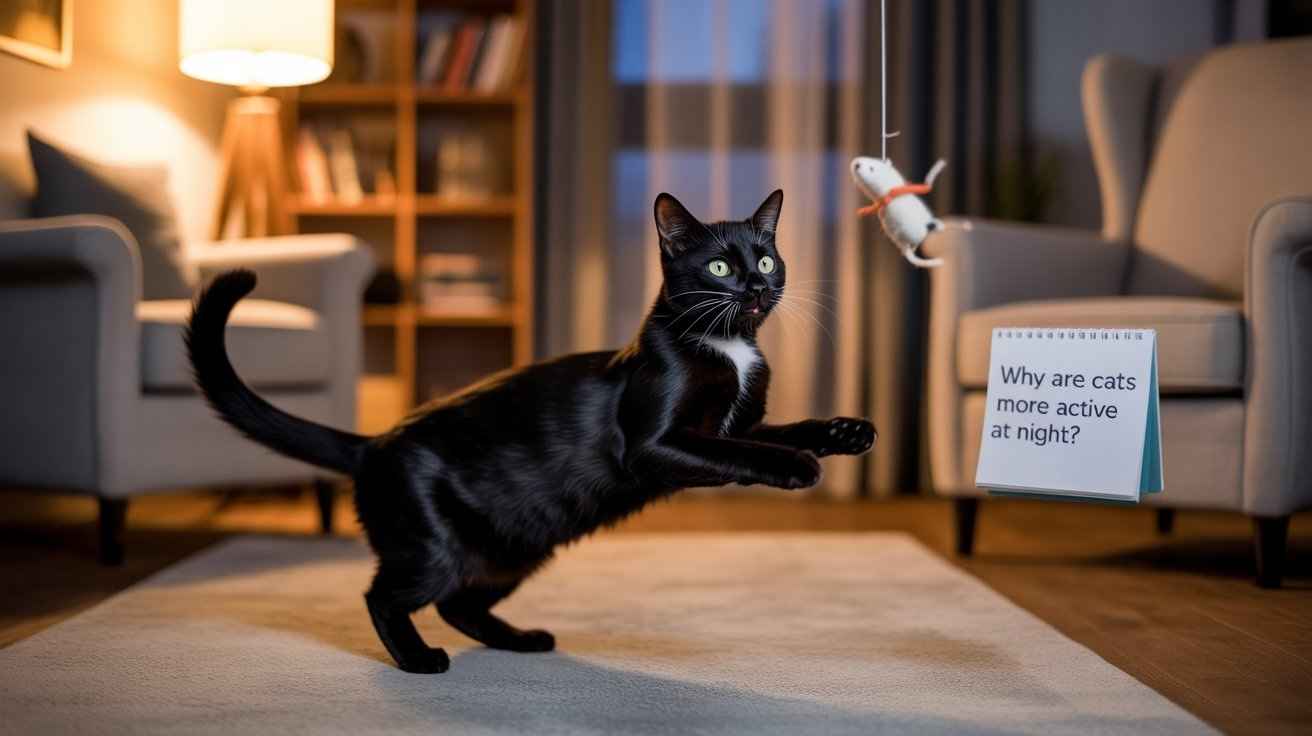
Why are cats more active at night? 4 fascinating reasons: 1. Hunting instinct 2. Sharp senses 3. Energy bursts 4. Natural rhythm.
Why Are Cats More Active at Night?
Do you ever hear your cat running or jumping at night when everyone is asleep?
You are not alone! Many cat owners ask, “Why is my cat so active at night?”
Don’t worry — your cat isn’t being naughty. Cats are naturally active when the world is quiet and calm.
Their instincts, body, and daily habits make them move more during the late evening and early morning.
Let’s find out the four main reasons why cats are so active at night — and what you can do to help your furry friend sleep better.
4 Fascinating Reasons Why Are Cats More Active at Night?
| Reason | What It Means | Common Cat Behavior |
|---|---|---|
| Natural Instincts | Cats are active at dawn and dusk | Running or jumping early or late |
| Body Features | Cats can see and move well in the dark | Quiet exploring at night |
| Habits & Behavior | Boredom, hunger, or attention | Zooming, meowing, or scratching |
| Health or Stress | Illness or change at home | Restless or can’t sleep |
1. Crepuscular Instincts – Nature’s Timing
Many people think cats are nocturnal, but that’s not true. Cats are crepuscular, most active in the early morning and evening.
In the wild, cats used these times to hunt mice, birds, and small animals. It was calmer and safer than during the day.
Even though your cat lives inside, it still follows that natural body clock.
So, when your cat runs or plays in the early morning or late at night, it’s not misbehaving — it’s just following its wild instincts!
Remember: Night play is normal cat behavior — not bad manners!
2. Body Features That Help Cats Move in the Dark
Cats are built for the night. Their eyes can catch tiny bits of light, letting them see well even in darkness. They also have a special part in their eyes called the tapetum lucidum, which reflects light to enhance their vision.
Their ears hear even the quietest sounds, and their whiskers help them feel their surroundings.
That’s why your cat may suddenly jump, chase, or pounce in the dark — it’s acting like a hunter!
These skills helped wild cats survive and hunt in the past. Today, your cat still enjoys using them — even if it’s just chasing toys or shadows in your living room.

3. Behaviour and Daily Habits
Some cats are more active at night due to their natural habits or temperament.
Here are some common reasons:
- Too much sleep in the day: Cats nap for hours, so they may want to play when you’re asleep.
- Boredom: Indoor cats without enough fun or toys can get restless.
- Attention-seeking: If your cat learns that meowing makes you wake up or feed it, it will continue to do so.
- Feeding routine: Cats who eat dinner too early might feel hungry later at night.
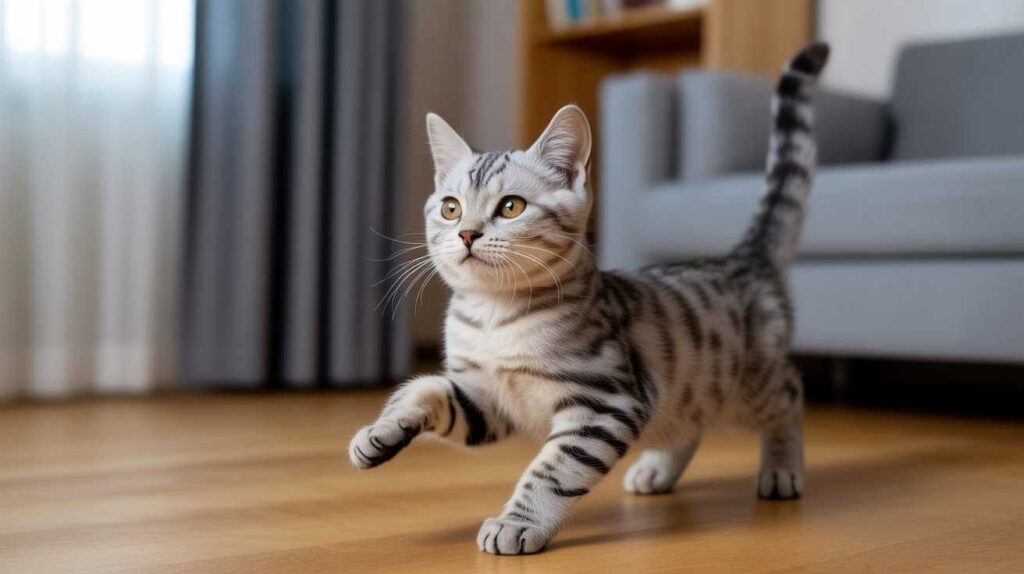
This behaviour is often referred to as the “zoomies.” Cats suddenly run, jump, and play because they have lots of stored-up energy.
Tip: Try a 10–15 minute playtime before bed. Use toys like feather wands or balls. It helps your cat use up energy and sleep longer.
4. Health or Environmental Problems
Sometimes, cats stay awake at night because something is wrong.
If your cat suddenly starts being restless, loud, or pacing around, it could be due to:

- Hyperthyroidism: A health problem that gives cats too much energy.
- Pain or arthritis can make it difficult for older cats to get a good night’s sleep.
- Stress or anxiety: Changes like a new pet, new furniture, or loud sounds can upset cats.
- Cognitive issues: Older cats may get confused and walk at night.
If your cat’s behaviour changes suddenly or is accompanied by weight loss, vomiting, or excessive meowing, visit your veterinarian.
A simple check can keep your cat healthy and calm.
How to Help Your Cat Sleep at Night
| What to Do | How It Helps |
|---|---|
| Play before bed | Uses up energy so your cat feels sleepy |
| Feed dinner late | Keeps your cat full through the night |
| Ignore night meows | Stops attention-seeking behavior |
| Add fun toys or trees | Keeps your cat busy and happy |
| Keep a routine | Cats relax when life is predictable |

Final Takeaway
Cats are not truly night owls — they are crepuscular, meaning they love dawn and dusk.
Their instincts, sharp senses, and playful energy make them move more when it’s quiet and dark.
You can’t change this natural behaviour, but you can manage it easily.
Play with your cat before bedtime, feed it later, and keep a daily routine.
Soon, your cat will sleep more peacefully — and so will you!
FAQs
1. Are cats really nocturnal?
No. Cats are crepuscular — they’re most active at dawn and dusk, not all night long.
2. Why does my cat run around at night?
That’s called the zoomies! Cats run when they have too much energy or are bored.
3. How can I stop my cat from waking me up?
Play with your cat before bedtime, feed it a bit later, and ignore meowing so it doesn’t learn to get attention that way.
4. Is nighttime meowing normal?
A little is fine. However, if your cat suddenly meows loudly or appears upset, it may need a veterinary check.
5. Will my cat calm down as it gets older?
Yes! Most cats become calmer with age, a consistent routine, and sufficient playtime during the day.
Hi, I’m Sana Sajid!I’m the voice behind CatsCare.blog, sharing my 10+ years of hands-on cat care experience. With a diploma in animal care, I offer practical tips, trusted advice, and easy-to-follow guides to help keep your cats healthy and happy.
When I’m not writing, I spend time with my own cats or exploring the latest developments in feline health. Follow CatsCare.blog for expert insights and real cat stories!

![A sleek black cat with bright yellow eyes and a white chest patch is lying down in front of a blurred bookshelf filled with books. [Why Black Cats Have Yellow Eyes]](https://catscare.blog/wp-content/uploads/2025/10/Why-Black-Cats-Have-Yellow-Eyes.jpg)

2 thoughts on “4 Fascinating Reasons Why Are Cats More Active at Night?”